I recently commented on another blogger’s beautifully written post about going public with her daughter’s diagnosis, and her words struck a chord deep within me. Her courage stirred something I hadn’t fully processed yet. You see, it has truly only been within the last year that I have been able to say the word “autism” out loud when referring to my own son. Before that, I carefully skirted around it, using softer phrases like “he has some special needs,” “he has a few quirks,” or “he has a language delay.” On my braver days, I might say “he has ASD,” quietly knowing most people didn’t really understand what that acronym meant anyway.
It didn’t help that it took us four long years to receive an official medical diagnosis. Our son often walked the fine line of being considered “high-functioning,” to the point where, on a good day, he could even fool certain mental health professionals. Yet every therapist and teacher who worked closely with him agreed without hesitation—he was absolutely on the spectrum. Without a formal label, we were left in an uncomfortable gray area, unsure how to explain his challenges to others. While he still received early intervention services and much-needed support, I often found myself stumbling through explanations of his behavior to friends, family members, or other parents, never quite knowing what to say or how much to reveal.

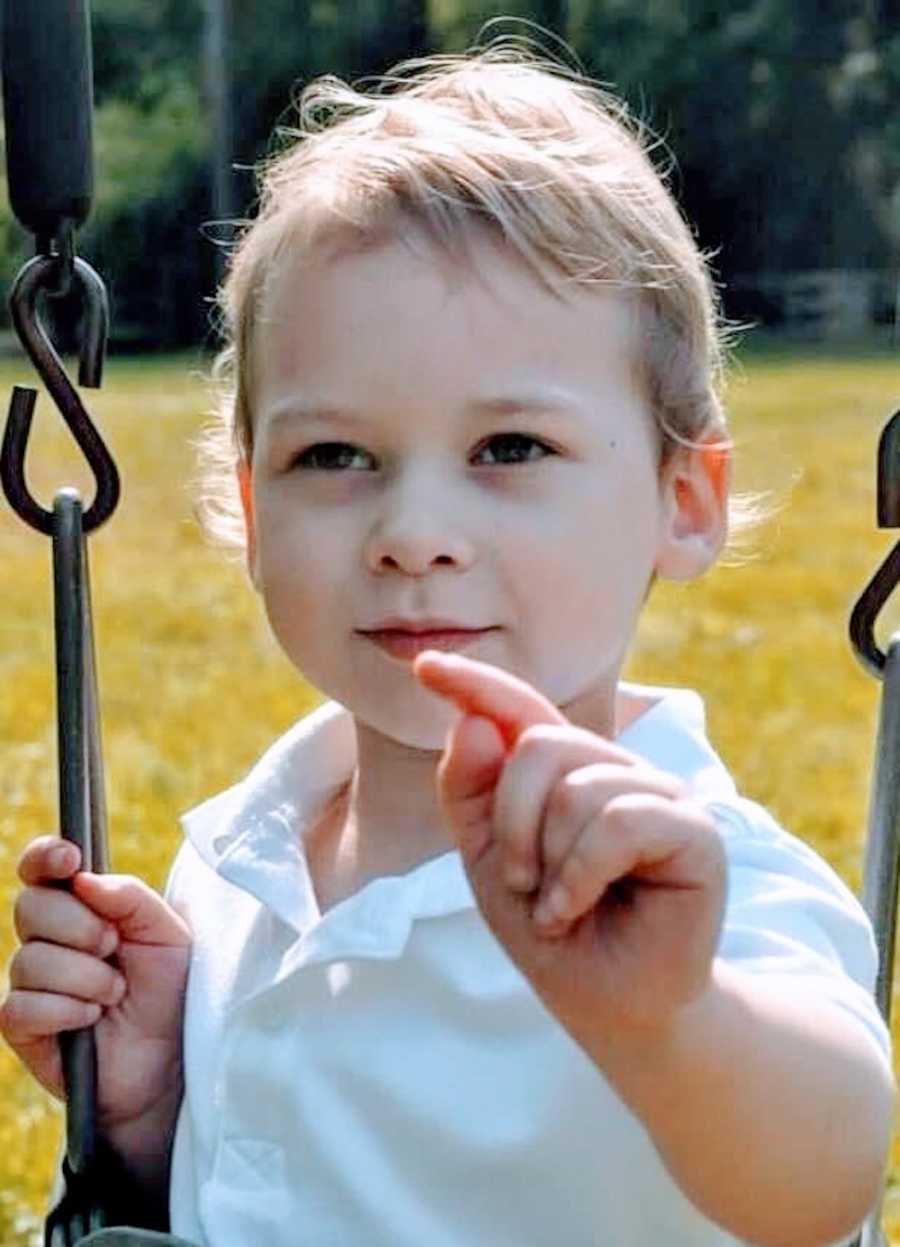
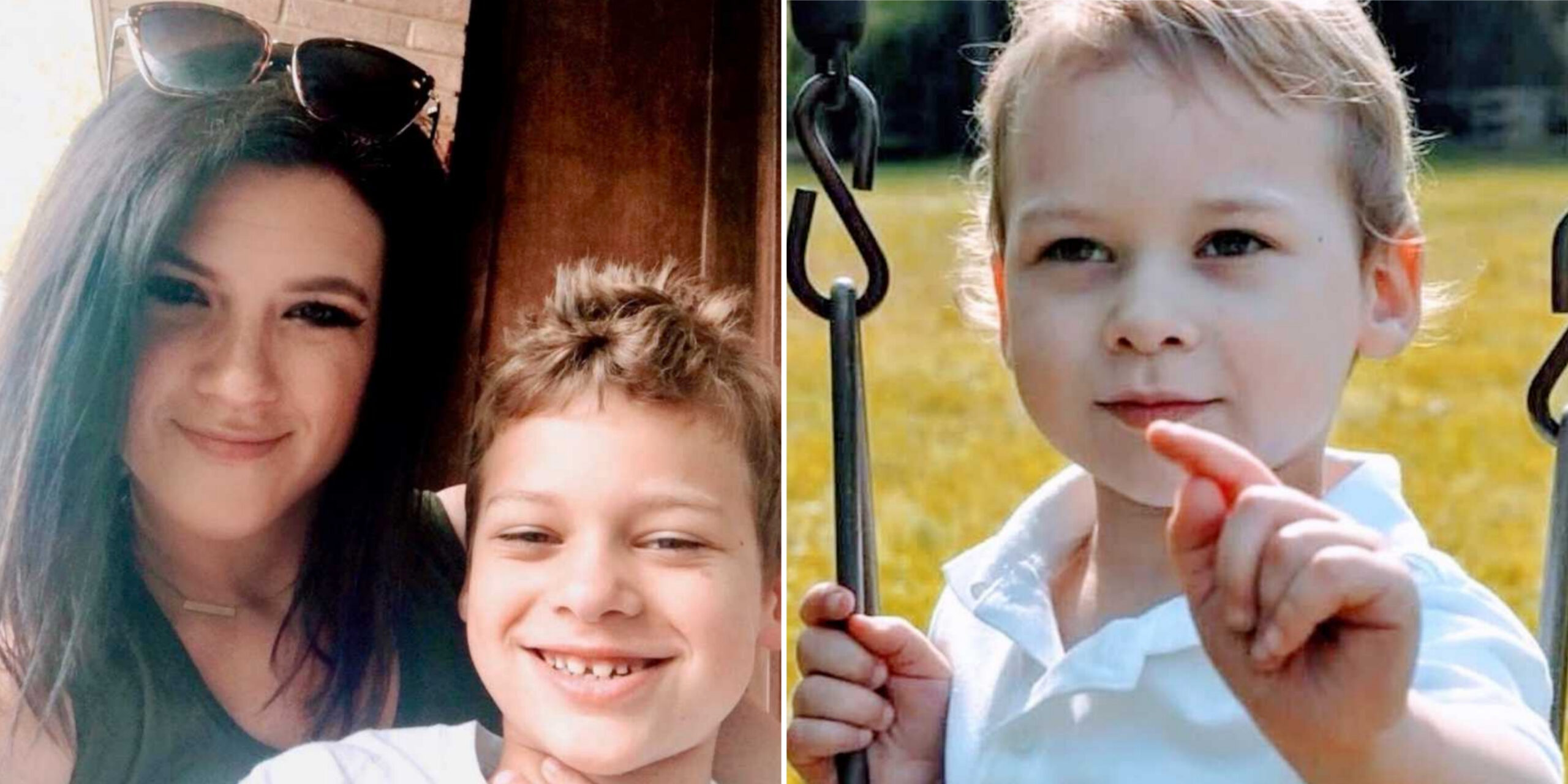
I’m still not entirely sure why I was so terrified of saying that “A” word. It felt unbearably heavy, as if admitting it would permanently brand my child with a scarlet letter across his chest. I feared that once people heard it, they would never see past it. They would miss everything else—the clever way his mind works, the deep tenderness he shows toward animals and his family, his contagious laugh, and the way his entire face lights up when he finds something funny. When I think of all the joy he brings into our lives, my mommy heart could burst with pride. And yet, that same heart felt painfully fragile, knowing how quickly it could be shattered by a careless glance or an unkind comment.
I remember one particular incident vividly, during his early “tantrum” days. We attempted a weekend getaway, even though public outings were still incredibly difficult for us at the time. Wanting to give our daughter a sense of normalcy, we decided to attend a dolphin show. That day, our son had a full-blown meltdown—the kind of explosive, ear-piercing screams that feel like they might shake the ground beneath you. (If you’re raising a child on the spectrum, you know exactly what I mean.) Unfortunately, an elderly woman nearby was so startled by his cries that we thought she might faint. The look of disgust and judgment on her face cut straight through me. Rage boiled up instantly, and I went into full mama-bear fight-or-flight mode. Rationally, I knew her reaction was likely rooted in ignorance, not malice. At her age, autism awareness probably hadn’t crossed her path. It could have been a teachable moment—but grief and pain don’t always allow space for grace. If not for my sweet husband, who knows my temper well, I’m convinced I would have ended up arrested for assaulting an elderly woman. In my mind, I wanted that “shriveled-up old prune” to feel even a fraction of the hurt her looks caused. My emotional explosion rivaled my three-year-old’s meltdown. It was far from my finest moment.
Around that same time, I had a dream—more accurately, a nightmare—that stayed with me long after I woke. In it, my son was involved in a conflict with another child a short distance away. The other child’s father intervened, assuming the worst. I knew in my heart that it was all a misunderstanding caused by my son’s communication delay, but the situation escalated quickly. The father began screaming at my son, threatening him. I ran toward them in a panic, overflowing with fury and fear, desperate to protect him. I tried to explain that my son had autism—but the word wouldn’t come out. No matter how hard I tried, I physically could not say it. That dream haunted me for weeks. The desperation, the inability to defend my child when he needed me most, reflected the deep fear and turmoil I was carrying as I struggled to process his diagnosis.
Time has passed since then. While I remain fiercely protective, my grieving heart has slowly healed. I’ve moved into acceptance, a transition I credit largely to the incredible people who showed up for us along the way. Therapists, teachers, counselors, and friends who saw our son for the gift he is. People who cherished him, celebrated his individuality, and focused on his strengths instead of his diagnosis. They taught me that autism is not something to fear or pity, and certainly not a life sentence. Through them, I learned that my child can thrive, grow, and be unapologetically himself.
My son has autism. There—I said it. And now, I can say it with the same matter-of-fact honesty that I say my daughter has Type 1 Diabetes. Just as there are countless misconceptions about Type 1, the same holds true for autism. But I’ve realized that those misunderstandings will never change if we keep our children hidden. My greatest fear was never the diagnosis itself—it was the possibility of my children being rejected by the world. One quote continues to resonate deeply with me: “I would not change you for the world, but I would change the world for you.”
So here I am, trying to change the world one blog post at a time. The world is better for knowing my son. They will know he has autism—and they will also know he is kind, loving, joyful, and extraordinary in countless ways. Autism may be part of his story, but it is not the only word that defines him. He also carries “L” for loved, “C” for cherished, “W” for wonderful, and so many more letters that make him who he is.
When you look at my son—and at others with autism—I hope you’ll think of new “A” words, like Awareness and Acceptance. And if you’re a parent standing at the beginning of this journey, holding a fresh diagnosis with trembling hands, I offer you hope. Your child is still the same beautiful, unique individual they’ve always been. The rest of the world just needs time to catch up.