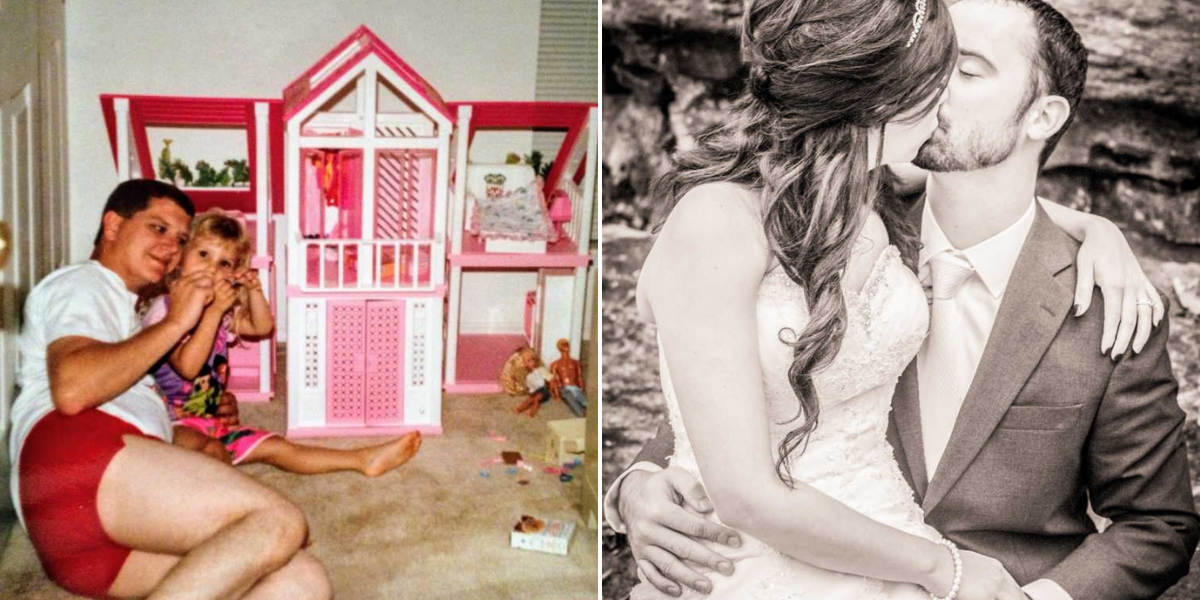
My father took his own life when I was five years old. I remember riding in the car to the gas station with my mom and my ten‑month‑old baby sister so we could call the police. I remember sitting on our front porch, wrapped in my mom’s arms, as the paramedics wheeled him out of our house. I remember living with my grandparents for a while after “he left.” I remember my mom’s best friend picking me up from the funeral home on the day of his service. I remember struggling to manage my emotions, seeing a counselor to help control my tantrums. What I struggle to remember most is him.
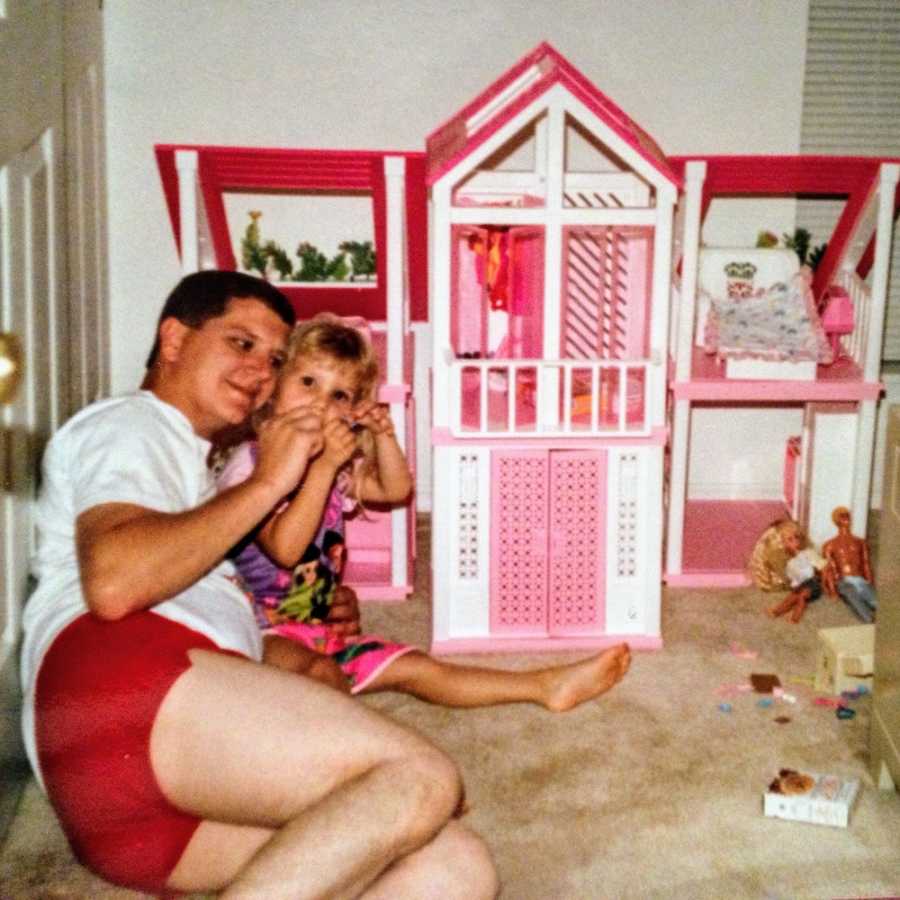
My father died in 1994, when suicide and mental health were even more taboo than they are today. Because of that, my family chose silence. What happened was kept secret, and my mother never received the counseling or support that, looking back now, she desperately needed. As she moved through the stages of grief, I quietly learned to pick up the slack. It took years for her to move past the anger she carried—anger she still slips back into even now. I constantly heard how much I looked like my dad and how I was destined to end up just like him. It wasn’t until high school that I learned how my father actually died. Until then, I assumed she meant I was destined to be worthless and end up dead. Though my dad was rarely mentioned, when he was, he was painted as a monster. Naturally, I learned to believe that any similarity—physical or personal—was something to be ashamed of.
As time went on, I absorbed everything my mother told me. I didn’t want to kill myself, but I also didn’t see the point in living, convinced I was inherently weak. My mother never hugged me or told me I was beautiful. Instead, she pointed out my flaws. My teeth weren’t white enough. My face was “gross” when acne appeared. Anything less than an A meant I wasn’t smart enough. By high school, I had no sense of who I was or what my purpose might be. I believed my feelings were normal, assuming everyone experienced the same struggles with their mothers. I was constantly grounded—my mom even turned the doorknob around so she could lock me in my room. Verbal anger eventually turned physical. I was often called into the counselor’s office to explain bruises. I lied every time. I was terrified that telling the truth would mean losing the only parent I had left.
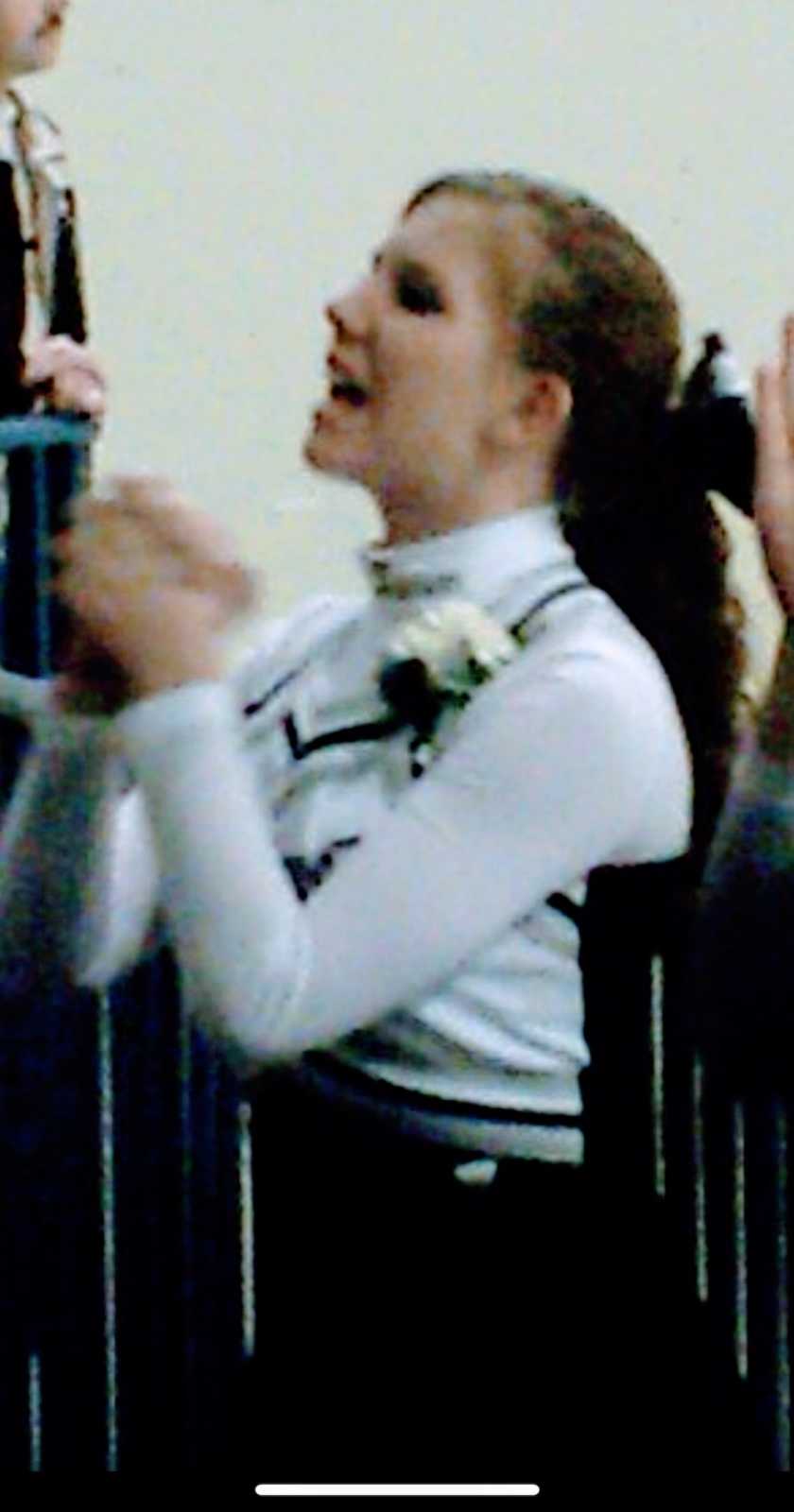
With the help of close friends and one extraordinary teacher, I survived high school and went on to college. I believed I was finally free from the prison I had lived in for over ten years… or so I thought.
One of the most unsettling truths about abuse is that it does not discriminate. I was smart, earning straight A’s. I was kind, always thinking before I acted, even knowing I’d be yelled at no matter what. People like to believe there’s a certain type of person who could never be manipulated—until it happens to them.
College gave me a sense of freedom and hope. During my sophomore year, I met my college boyfriend. He was a few years older, studying to become a firefighter. I wasn’t allowed to date in high school, and honestly, I lacked the confidence to even talk to boys. After one brief “first love” the year before, I thought I had hit the jackpot. At first, everything felt perfect. He treated me like a princess, befriended my friends, bought me gifts, and told me I was beautiful—words I had never really heard before. He told me he loved me. He made me feel safe.
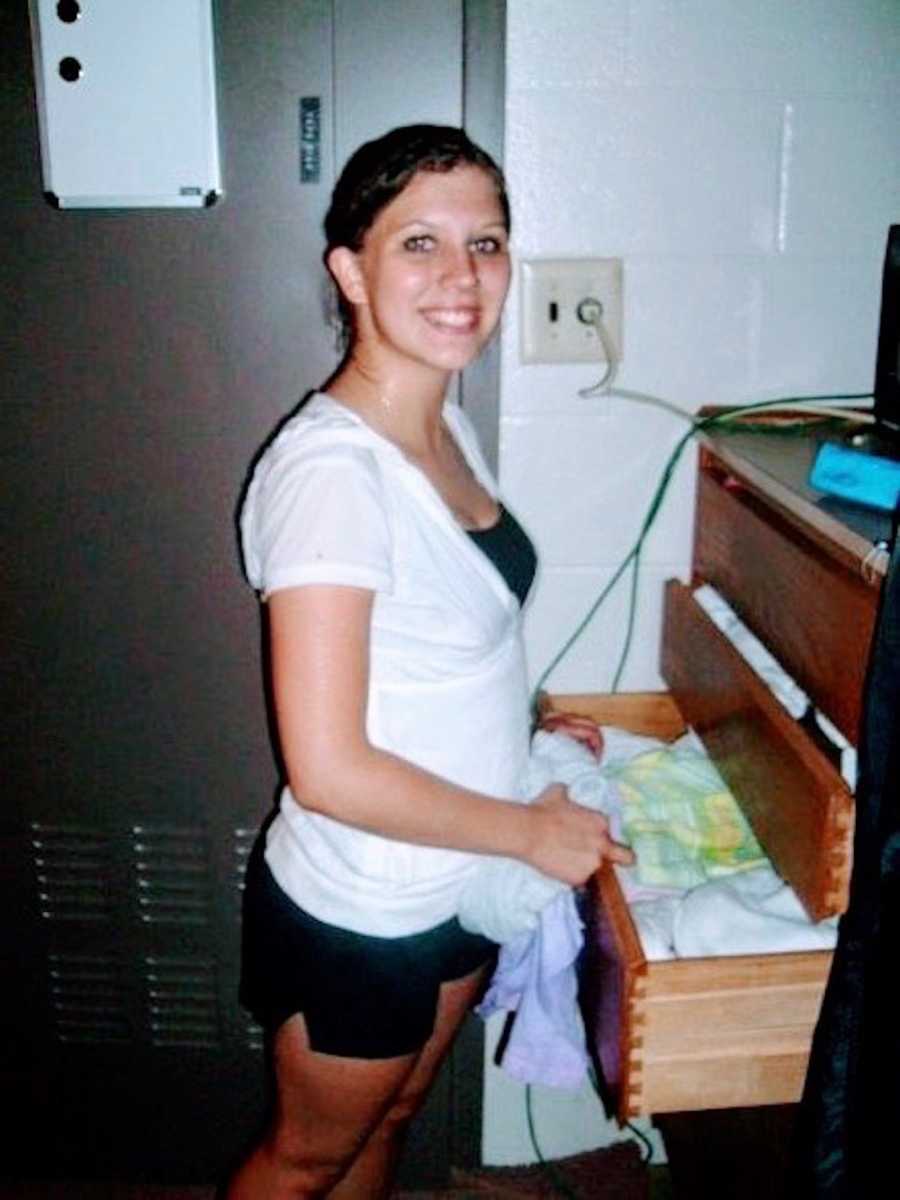
We moved into an apartment together the following year. Once he believed I was fully his, everything changed. Suddenly, I wasn’t beautiful anymore. I was “getting fat” and needed to work out. The house was never clean enough. I never pleased him enough. When he was angry, everything was my fault. One night, he picked me up, put me in our shared car, and drove me to my friend’s dorm, telling me I wasn’t allowed to come home. Later that night, the police called to say he had been arrested for a DUI—and somehow, even that was my fault. I tried to leave more times than I can count.
I always went back. Even after he isolated me from friends and family and convinced me they didn’t care, I stayed. I believed this was my destiny—that this was all I deserved. On normal days, I walked to school and work. On days he was angry, he insisted on driving me. I was always late when he drove. The car was a trap. He could scream, knowing I couldn’t escape. When I tried to jump out at stop signs, he would slam his arm against my chest until I couldn’t breathe.
“Nobody else will ever love you,” he told me. And I believed him. I believed I was nothing without him.
The final blow came the night our dog fell down the stairs. He accused me of throwing the dog on purpose. In response, he picked me up and threw me across the room “just like [I] threw the dog.” I landed upside down on my neck on the futon, my neck displaced. It wasn’t the first time he’d hurt me, but this time was different. I managed to get to the car and drive to his mother’s house. I had no one else nearby—my family and friends were over two hours away.
That night was my rock bottom. For the first time, I truly feared for my life. For the first time ever, I imagined a future—and realized I wanted one. I took pictures of my injuries but never pressed charges. I was terrified that if he lost his job as a firefighter, it would somehow be my fault. Still, I reclaimed some control. I moved in with my grandparents and completed my student teaching the following semester. For the first time, I felt happy.
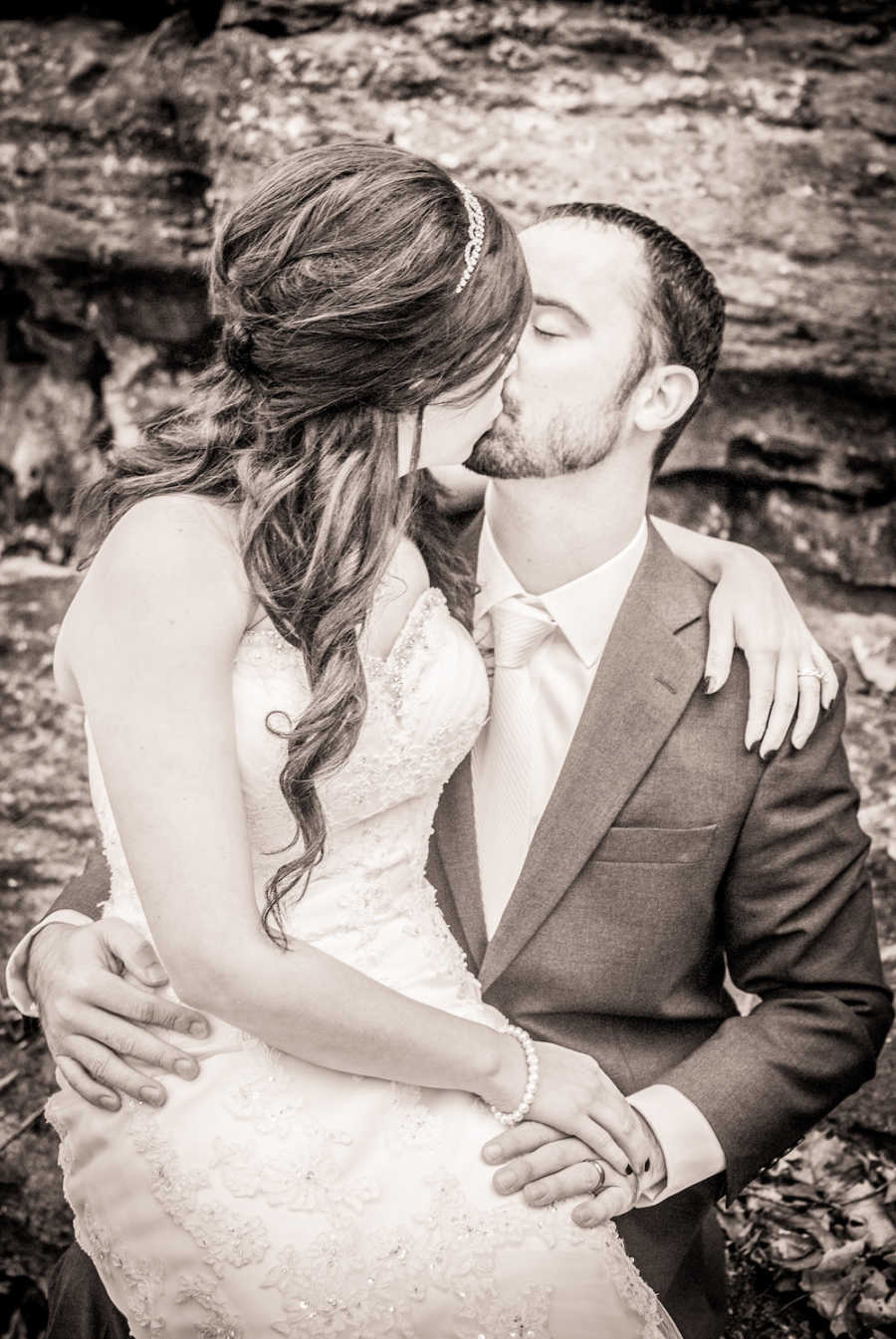
He continued trying to force his way back into my life—accessing my bank account, using my money to pay his bills, even showing up at my grandparents’ house. I kept moving forward. I forgave my mother for the emotional neglect of my childhood, understanding that her own depression and societal pressures left her unable to care for herself, let alone me. I poured myself into my students. They always deserved more than I ever believed I deserved.
And then, when I least expected it, I found my soulmate. With him, I don’t just feel loved and safe—I truly am loved and safe. Looking back, I realize those were the only things I ever wanted.
Suicide does not mean survivors were unloved. I have learned more about my father through my own life experiences than I ever did while he was alive. I love him. I miss him. I know he would be proud that I overcame what he couldn’t. I still grieve, but I also use that grief to advocate and raise awareness.
Suicide, abuse, and domestic violence do not define me. They give me perspective. They give me purpose. And they remind me that I am no longer just surviving—I am thriving.