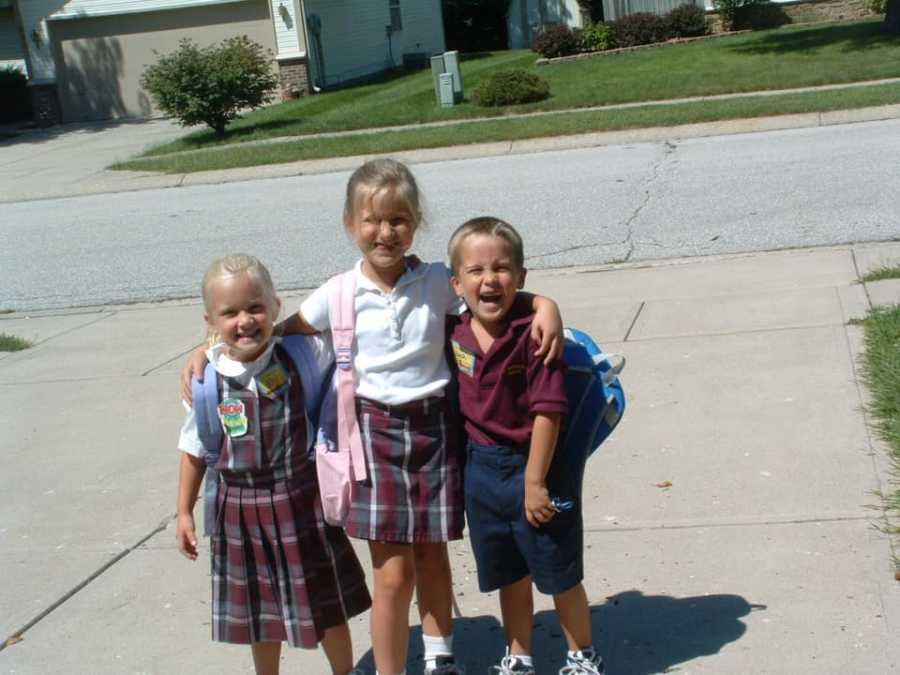
I had three happy, healthy kids—the kind of kids every parent thinks are “perfect.” Until they weren’t. It started on Wednesday, October 5, 2011, when Zach called me from the school nurse, complaining of a headache. Following our usual rule—no fever, no vomiting, back to class—I sent him back. For two days, he told me his eyes and ears felt “weird,” but I brushed it off as seasonal allergies and gave him a decongestant.
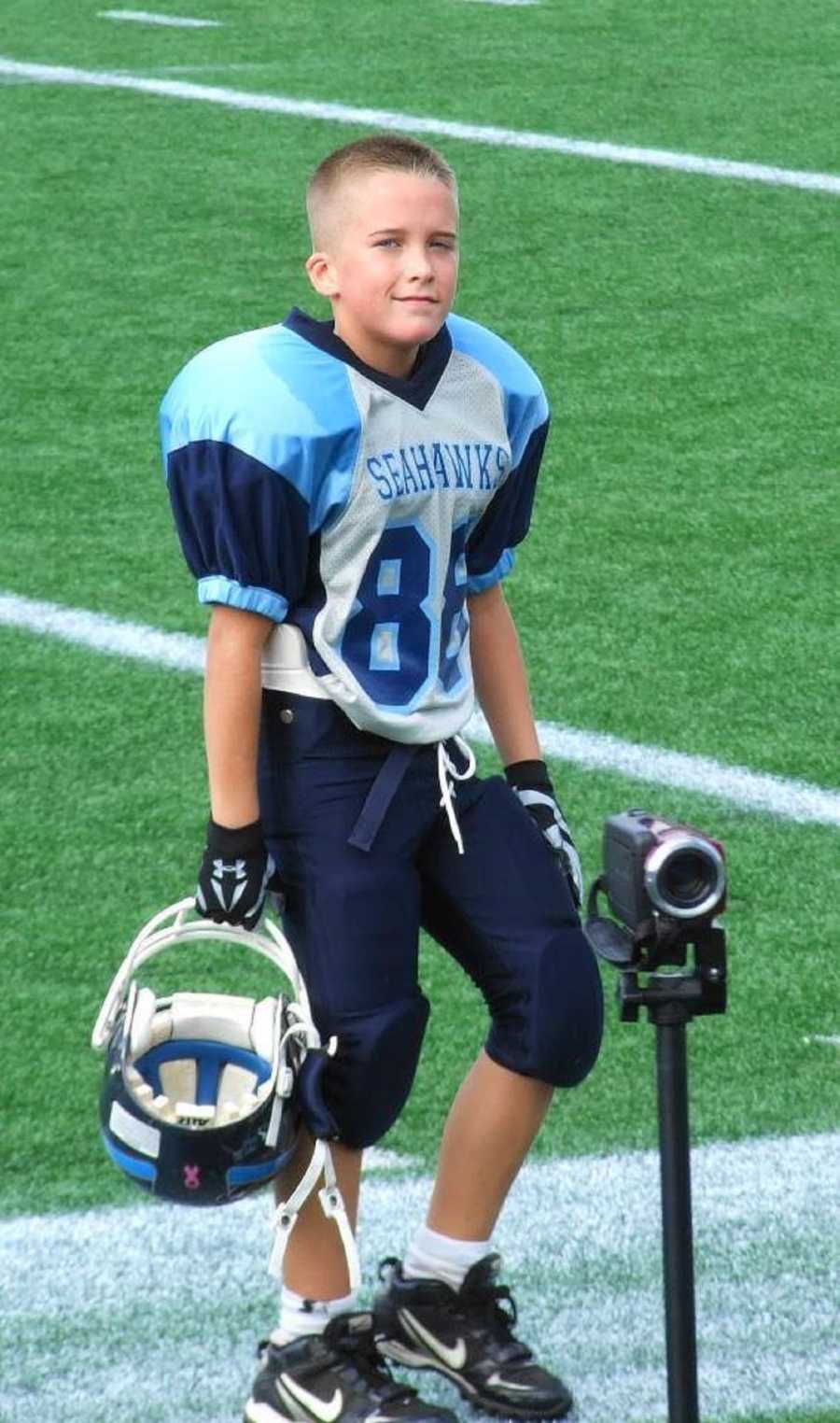
By Friday night, we were at his twin sister’s soccer game. Zach seemed to be holding his head oddly, so I asked a friend on the sidelines, who was a nurse, to take a look. Within a minute, she said, “You need to get him checked.” I laughed nervously. “Oh, okay,” I said. Then she repeated, “I mean now.” It was 8 p.m. on a Friday night. I scooped him into the van, and his dad followed behind with his sisters. I worried it might be a concussion—after all, it was football season. At the ER, a CT scan confirmed our worst fears: “There is a mass in his brainstem,” the doctor said. “A transfer unit from Children’s National Hospital is on the way.” Those words, strung together, sounded like a foreign language. Zach looked at me and asked, “Is it cancer?” My mom had died of cancer just two weeks earlier, so I had to answer honestly: “I don’t know.” His dad had a meltdown, and Zach turned to me, worried. “Is it really that bad, or is dad overreacting?” I said, “Probably a little bit of both.” Then, somehow, we laughed. What else can you do when your world collapses?
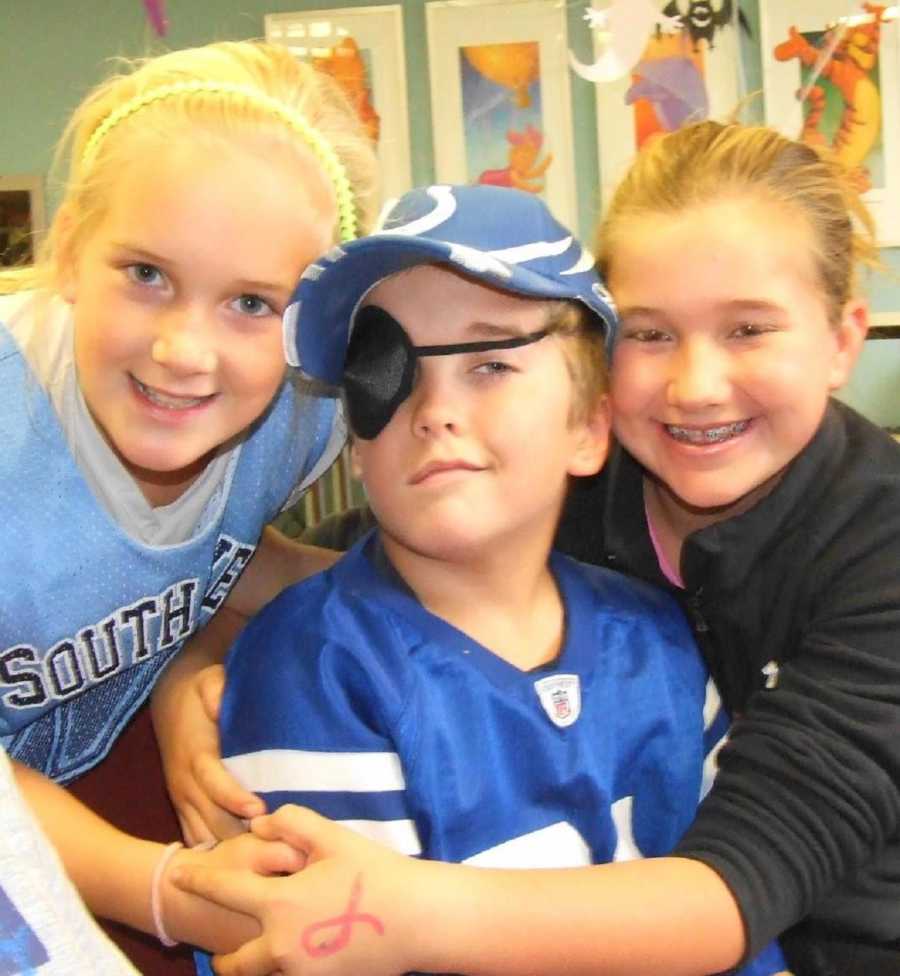
By the third day in the ICU, doctors told us the mass was likely a cavernous angioma—a blood vessel malformation he’d apparently been born with. Many people have them without ever knowing, but his was inoperable, buried deep in his brainstem. There was no treatment except surgical removal, which was impossible without risking devastating damage. They told us to go home, avoid blood thinners, take it easy. His eye turned in slightly, and the corner of his mouth drooped. I was heartbroken.
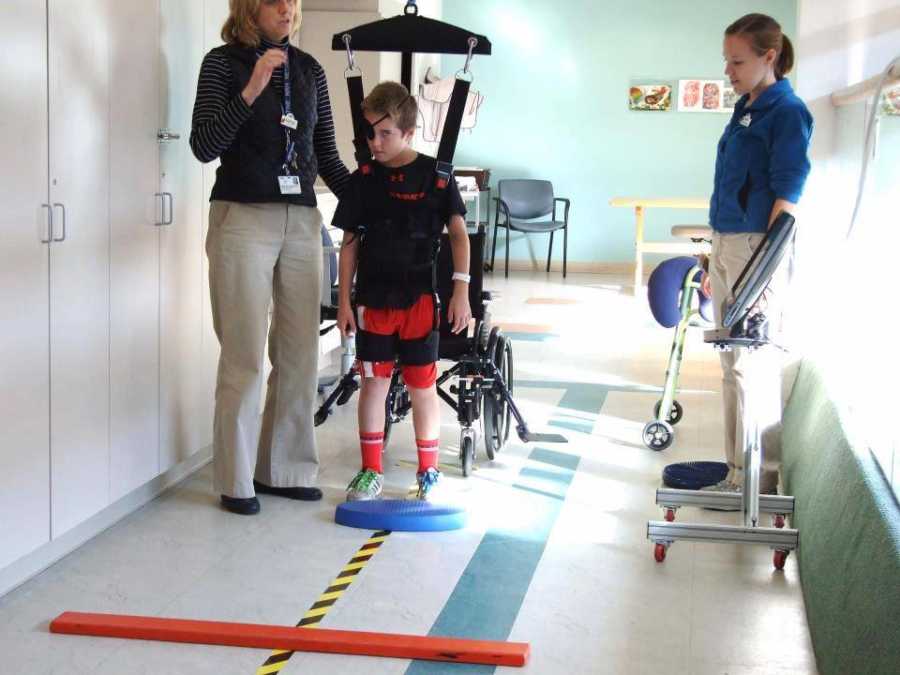
But just 24 hours after coming home, Zach suffered a second catastrophic bleed. His right face drooped further, his left side was paralyzed. He couldn’t walk, talk, see, or hear. Everything was shutting down. His dad carried him down the stairs as his sisters ran to a neighbor’s house. We sped over 100 miles per hour to the hospital we had just left, calling ahead to have neurology ready. I held his head as he vomited and made sounds that weren’t words. Surgery was still impossible. We had to wait—for the bleed to peak, for inflammation to subside, to see what might be permanent. Those days were terrifying, filled with moments so dark we still can’t speak of them. He spent several weeks in the hospital, then a month at the National Rehabilitation Hospital for intensive therapy. Watching him, a healthy, athletic 10-year-old, relearn how to walk with a wheelchair and then a walker was gut-wrenching. His sisters, Sammie, 12, and Alex, his twin, were by his side as much as we allowed, though some things are impossible to shield from young eyes. His teammates would come in vanloads, cheering him on.
While Zach worked on therapy, I refused to accept “there is no treatment.” In 2011, how could that be true? I found Angioma Alliance online and begged to attend a scientific conference in Washington, D.C. They told me it was closed, but I didn’t give up—I offered to help in any way, hoping to learn about potential treatments. That led to the Zach Brown 5K for Angioma Alliance, which has raised over $100,000 to date. In the years since, research has brought glimmers of hope. We try to keep Zach healthy and fingers crossed, hoping research can outrun another bleed.
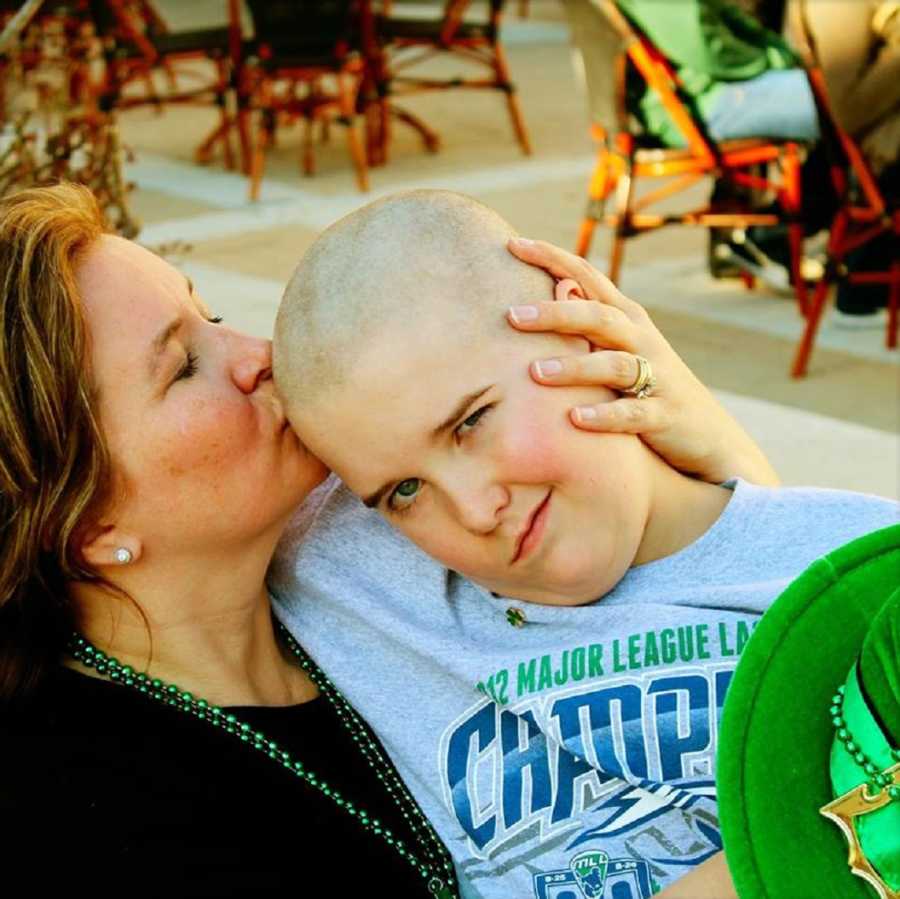
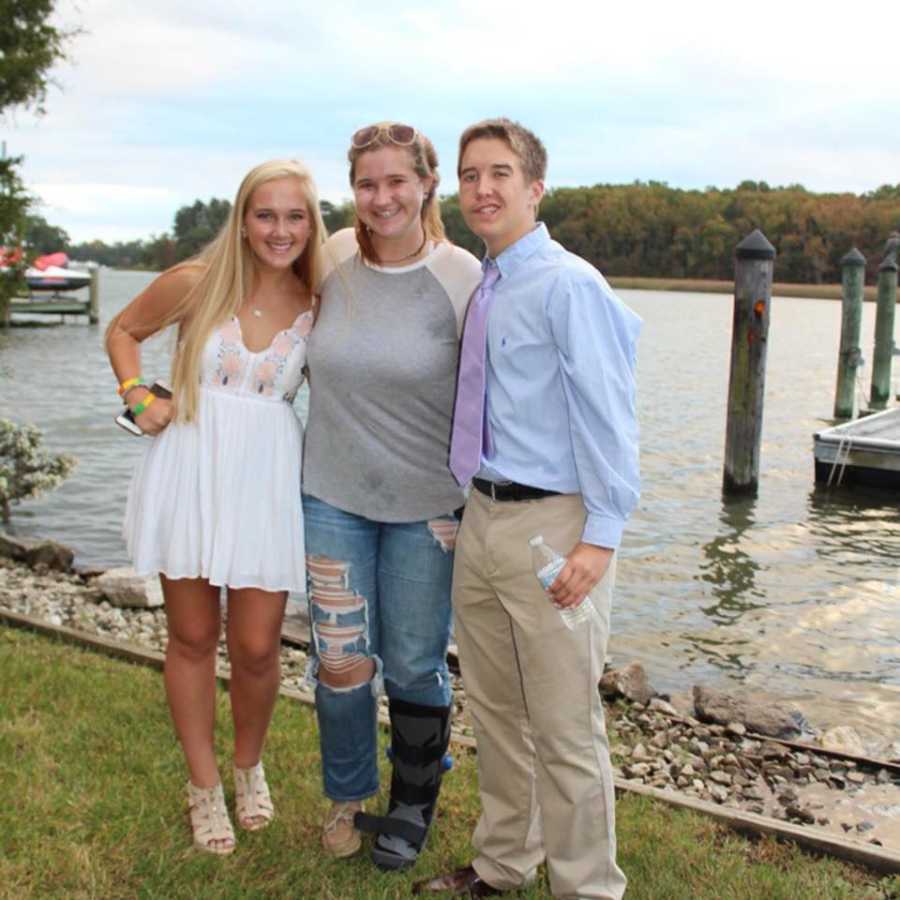
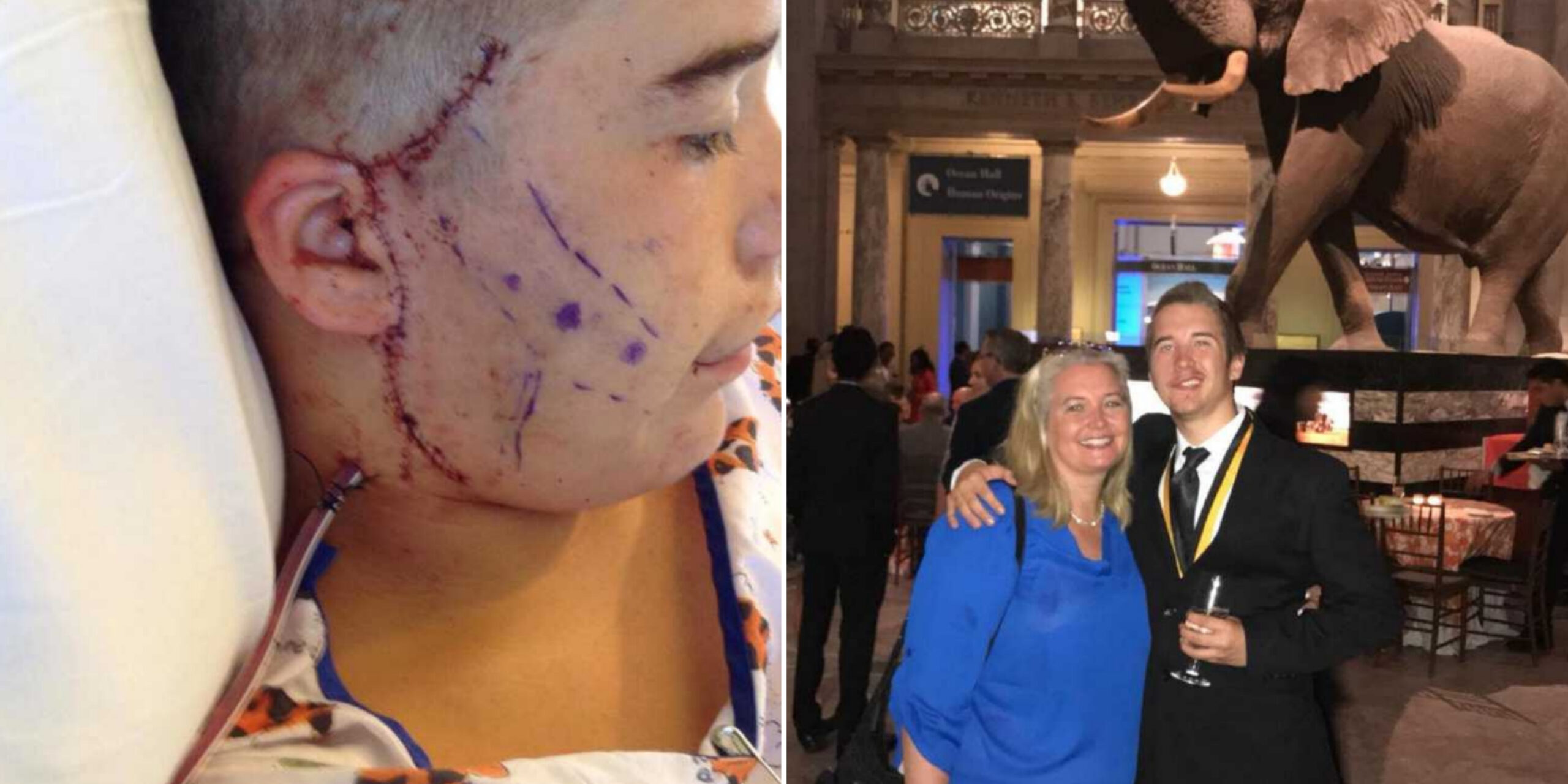
Zach has undergone eight eye surgeries and a two-part cross-face nerve graft to reanimate his face. He has partial hearing loss, emotional and psychological challenges, and some fine motor skill deficits. Yet he runs, smiles, and lives fiercely. He had to give up football, lacrosse, and wrestling, redefining himself at age 10—and he did it with resilience. He became a volunteer with nearly every Special Olympics team we could find. During his junior year of high school, he received the Prudential Spirit of Community Award as Maryland’s top teen volunteer. Zach and his sisters could have been bitter, but they chose compassion instead, opening their hearts to others. Zach became a face for Angioma Alliance, raising awareness and inspiring hope. He recently graduated high school and will attend a local college, with dreams of transferring to a university next year. His sisters now live hundreds of miles away, carving their own paths.
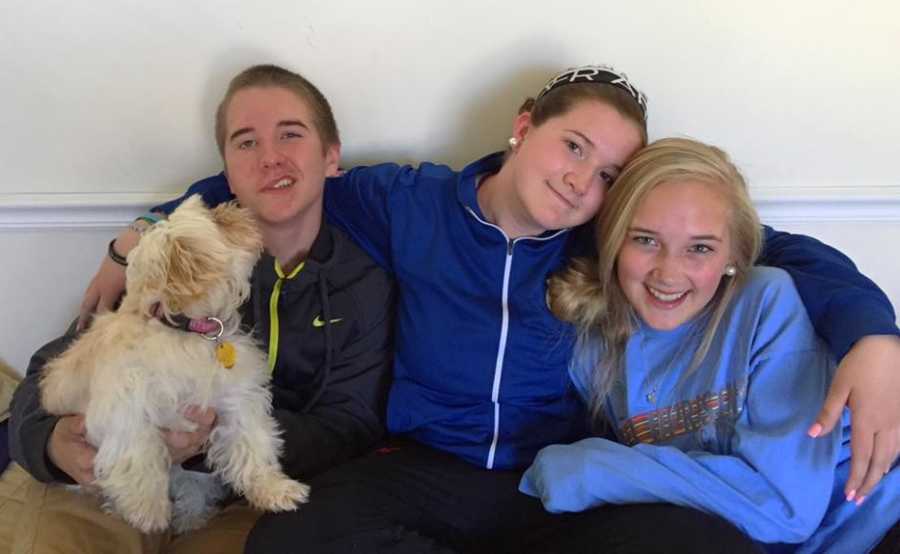
There was a time when I didn’t know if there would be a tomorrow, let alone a future. But now, I see three beacons of light shining in different directions. Through unimaginable trials, my children have grown kinder, stronger, and more compassionate than I ever imagined. Life may not turn out as expected, but it can still be beautiful. They teach me to cherish today and hope for tomorrow—and sometimes, that is enough.