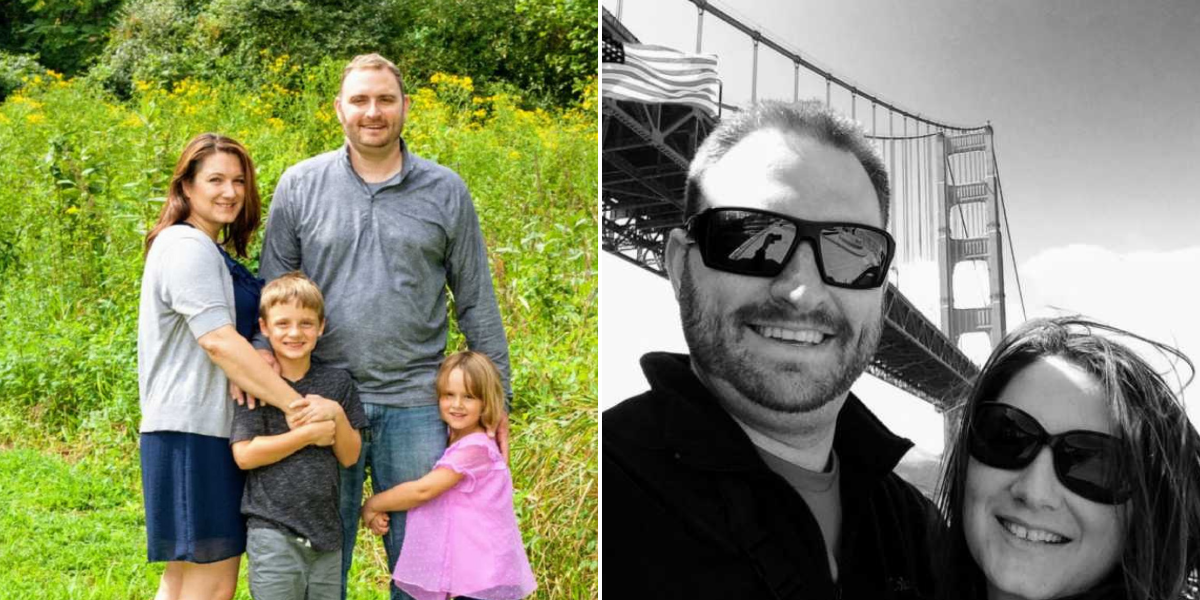
Life Before Illness
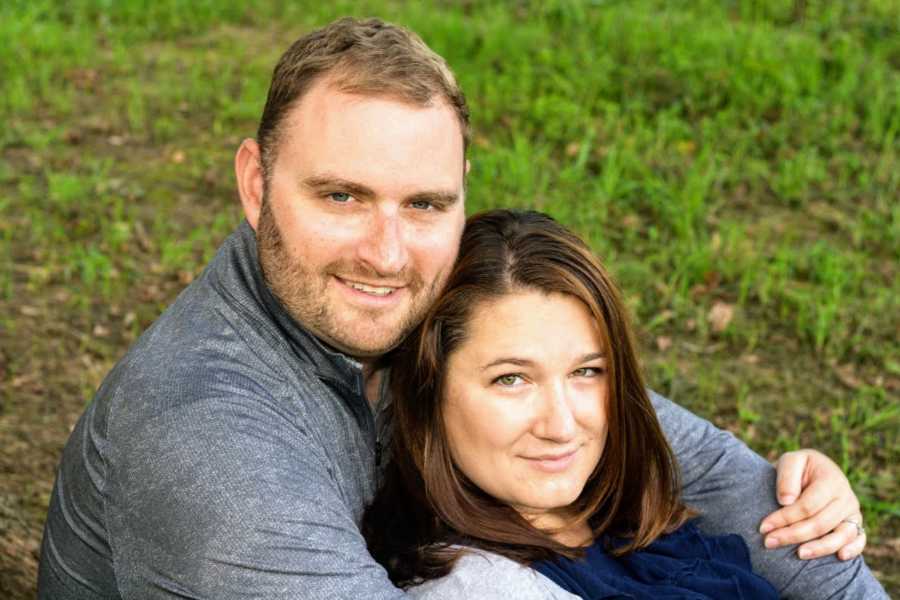
“My husband and I have always said we were meant to meet. It was the spring semester of our freshman year at a branch campus of Penn State. I remember hearing Tony’s big, booming laugh a few seconds before he walked into class for the first time. I immediately noticed the tall, handsome guy with those dimples that made you forget to breathe.
We became friends, though our friendship lasted only three weeks before our first date—he cooked dinner for me. I’ve always hated cooking, and yet by the end of the night, I was 90% sure I was going to marry him. Three years later, we did exactly that: we graduated and married on the same day in May 2005.
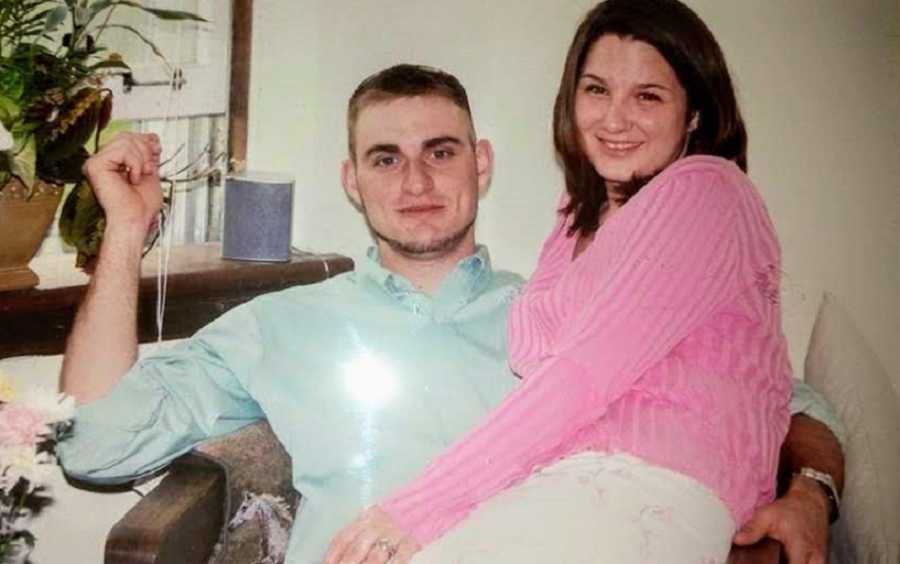
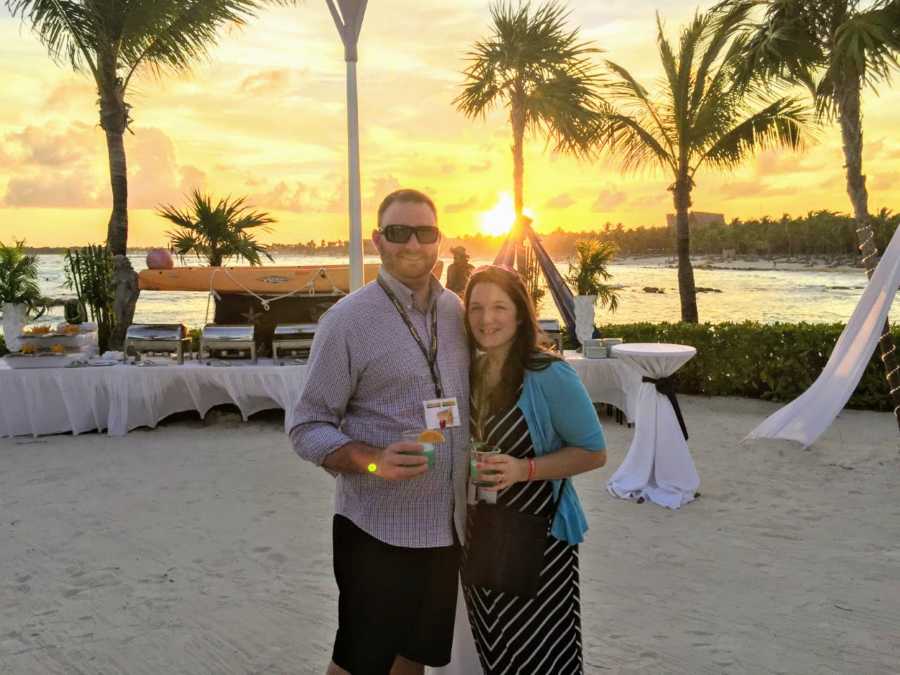
We cherished our newlywed life for about a year in Pennsylvania before Tony’s job took us to South Dakota. The retiree he was replacing shared some unexpected wisdom about moving halfway across the country: ‘One of two things will happen. You and Sara will either become best friends, or you’ll get divorced.’ We were already best friends, but that adventure strengthened our bond even more. We bought our first home, adopted our dog, and discovered a love for exploring state and national parks. That love for the outdoors stayed with us even after returning to Pennsylvania in 2009.
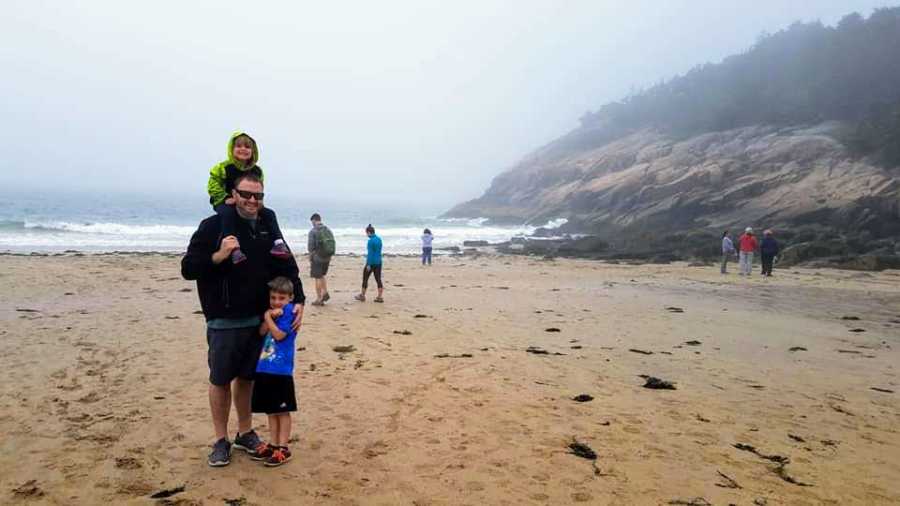
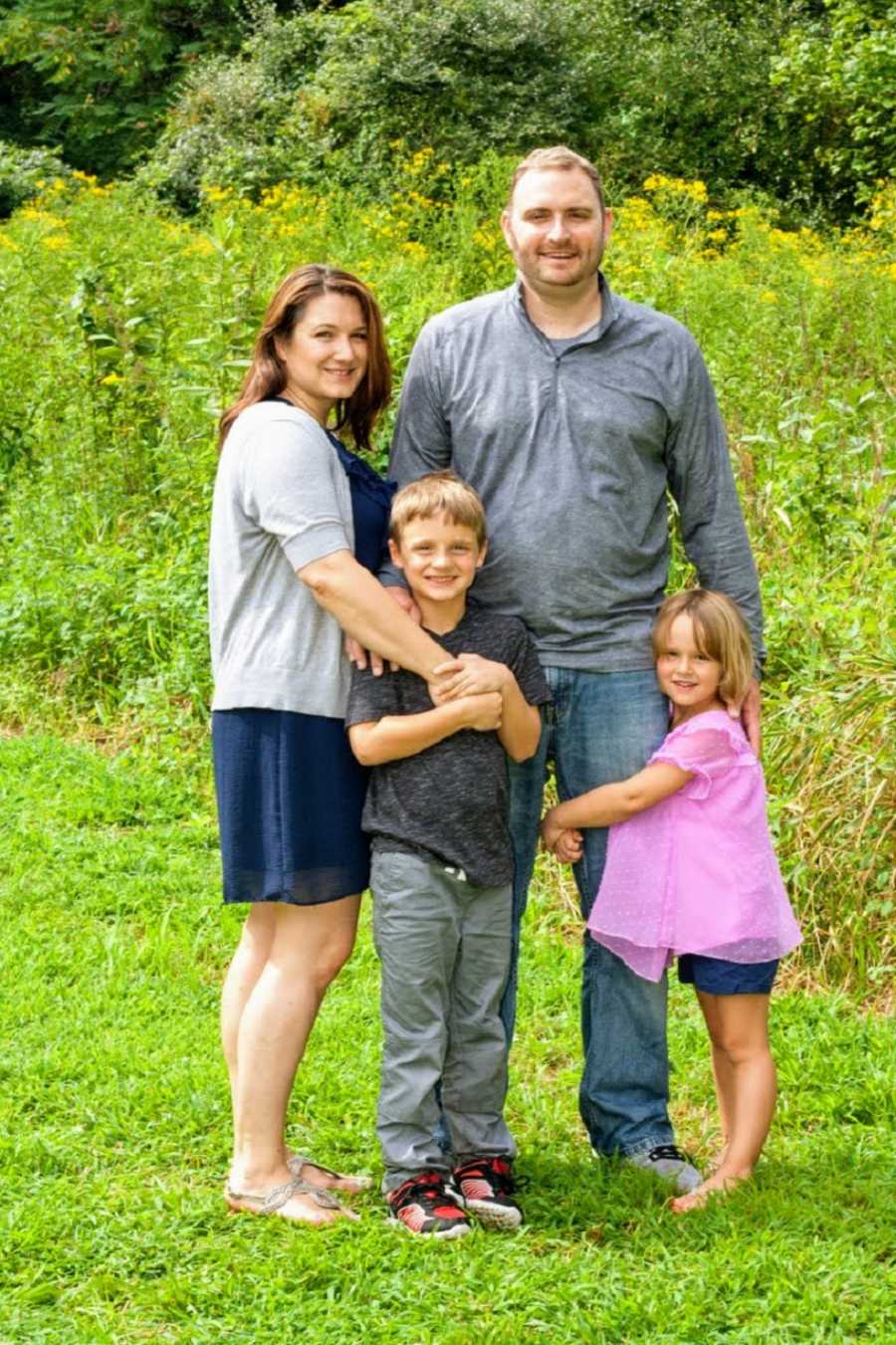
In 2011, we welcomed our son, and three years later, our daughter. Life felt nearly perfect. I was married to my college sweetheart, my best friend, and my favorite person. We had two healthy children, a dog, and good jobs. Those were truly happy days.
The Diagnosis
Then, on December 10, 2017, our world changed. Tony was diagnosed with non-Hodgkin’s lymphoma. That same afternoon, he was admitted to our local hospital, and just two days later, he started chemotherapy. Further tests revealed it was Burkitt’s lymphoma, a type that could not be treated locally. In January 2018, Tony began an intensive chemotherapy regimen at Johns Hopkins. The treatment required him to be no more than 45 minutes from the hospital—but we lived an hour and a half away. For each four-week cycle, he stayed in Baltimore for three weeks and returned home for the fourth. With an 80% success rate, I believed we would get through those months—a difficult but brief chapter in our story.
Tony, ever the social spirit, couldn’t sit still without work. Since he couldn’t call or email coworkers, he made friends with everyone at Johns Hopkins. He talked to every person who entered his room—doctors, nurses, social workers, food service employees, even the janitorial staff. He especially loved seeing Miss Aratha, who delivered his meals. Tony documented every dish he ate on CaringBridge, turning his treatment updates into something more like a food blog, much to our family and friends’ amusement.
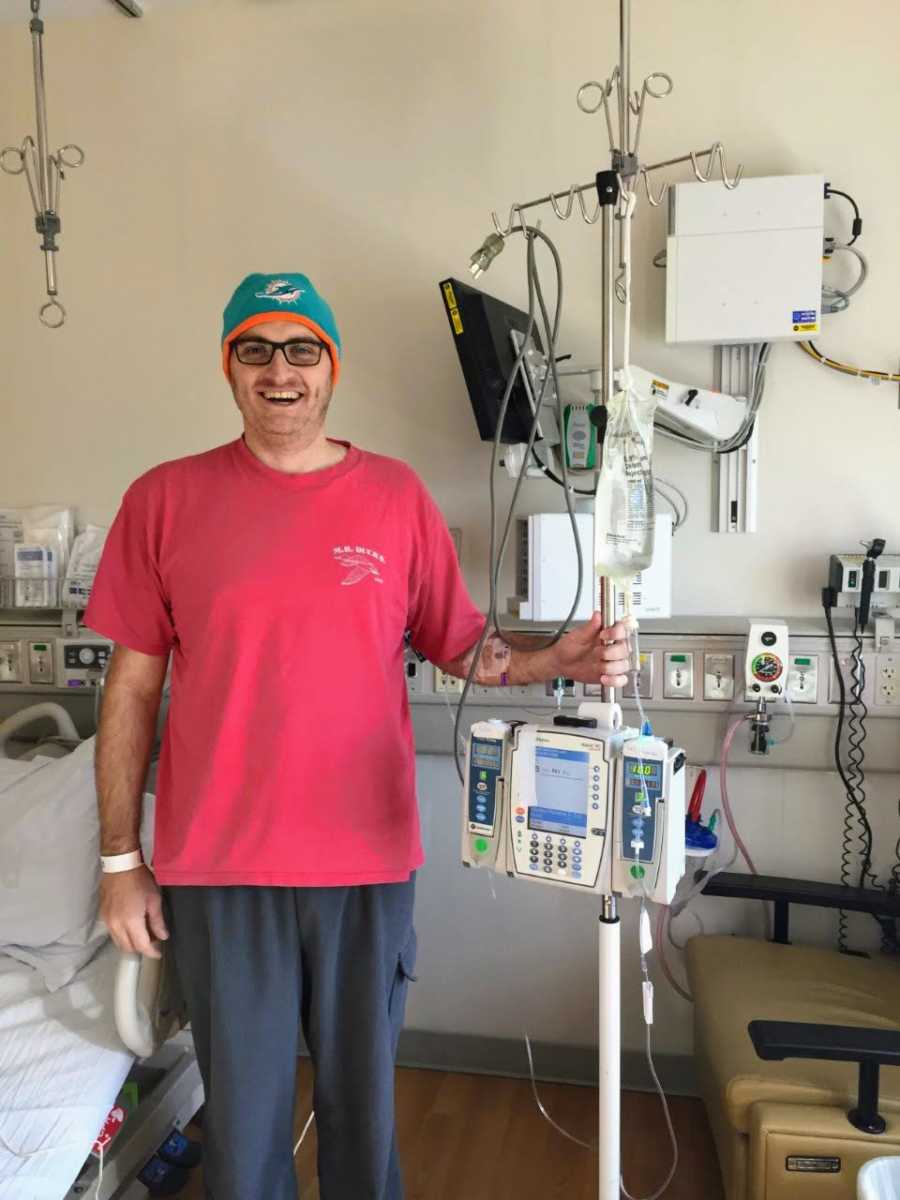
In March, a blood transfusion ignited a fire in him to advocate for blood donations. By early April, Tony finished his fourth and final chemo cycle. The medical staff marveled at how well he had tolerated treatment—but Tony, ever determined, had to be a bit difficult in his final days of therapy. He was hospitalized twice: once for a possible infection and again for a fever that turned out to be nothing. Finally, on April 13th, he was discharged. We chose to stay one extra night in Baltimore, cautious after the week’s surprises. The next day, we drove home together, just in time to surprise our children: a day before our son’s 7th birthday and three days before our daughter’s 4th. For the first time in months, we were truly home together.
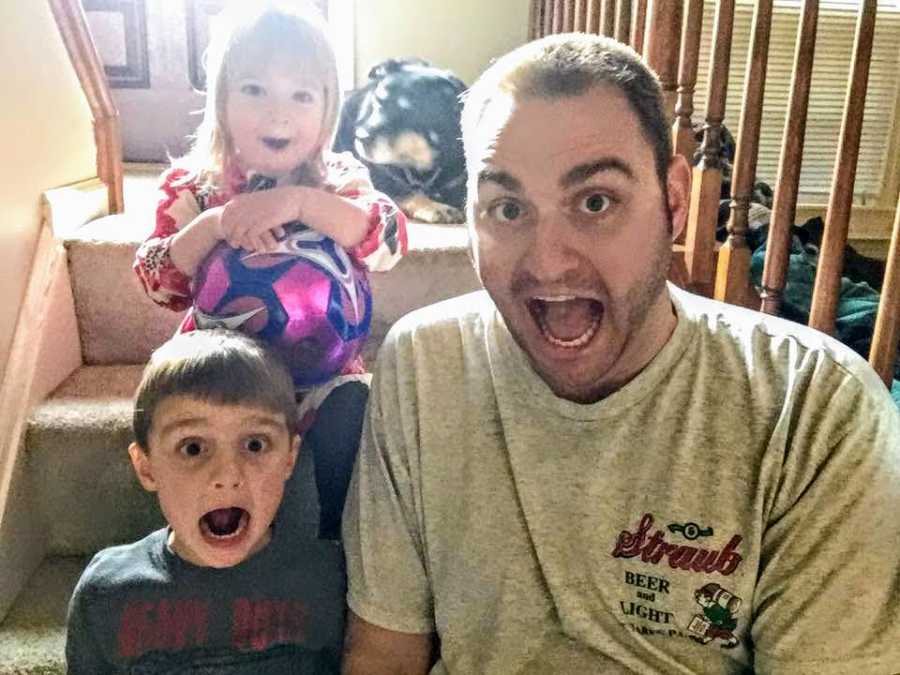
On June 7th, 2018, Tony received the results of a post-treatment scan at Johns Hopkins: ‘No evidence of disease.’ For a brief moment, it felt like we could finally close that chapter.
A New Mass
Our joy lasted exactly one month. By the end of June, Tony began experiencing spells of disorientation. On the morning of July 7, he woke me, struggling with more severe symptoms than before: turning his head involuntarily and unable to control his right hand. I drove him to the ER, fearing the worst.
It wasn’t a sinus infection. The MRI revealed a mass on his brain. As soon as the doctor left, we both cried. Through tears, Tony whispered, ‘Don’t let them forget me. Please, don’t let them forget me.’ I told him no one would—he wasn’t going anywhere.
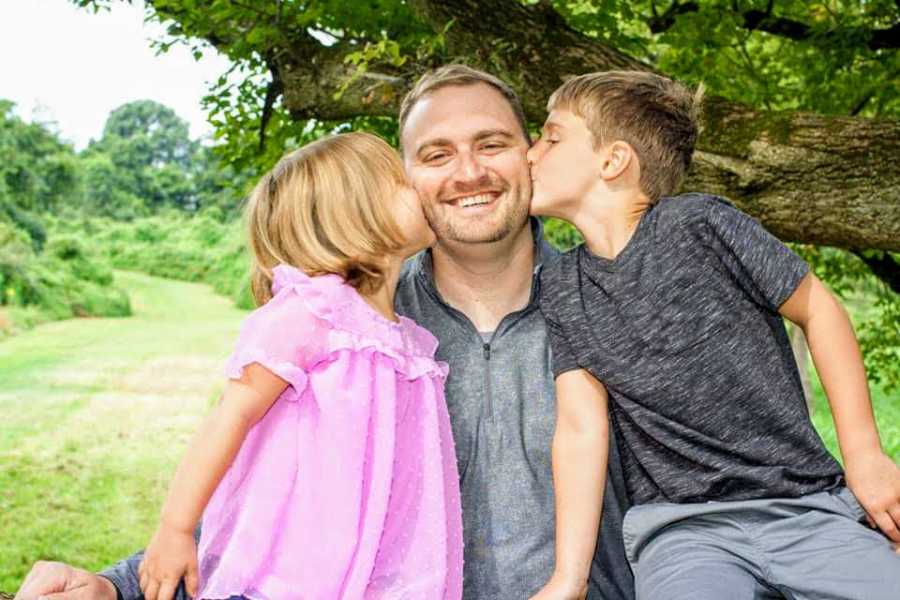
Within 48 hours, Tony was back at Johns Hopkins. He started anti-seizure medication and high-dose methotrexate every two weeks to shrink the mass, followed by a planned bone marrow transplant. At first, the mass seemed to respond, but after the fourth treatment, progress stalled. Radiation chemotherapy was next, though doctors worried it might not be lymphoma. Our hope remained steadfast.
A craniotomy was scheduled for September 21, 2018. In the weeks leading up to surgery, Tony went from driving to needing rides, then working from home. The night before surgery, he was so unsteady moving around the house, I held my breath every time he walked. Yet he still kissed each of our children goodnight—a moment that would haunt me with its tenderness and fragility.
The hospital stay, expected to last days, turned into weeks. Tony was intubated to begin radiation on September 30th. My once talkative, gregarious husband was suddenly silent. He could not call, text, or even speak. Though briefly extubated, he soon had a seizure and had to be reintubated. At that point, I shifted my prayers from healing him to asking God to guide us through whatever lay ahead.
The Final Days
One month post-craniotomy, scans showed a new lesion on Tony’s brain that had spread to the base of his spinal cord. We faced a devastating choice: continue radiation or focus on palliative care. Tony, though unable to speak, was aware. I asked if he wanted to continue radiation—he shook his head no. Did he want to come off the ventilator? He nodded yes. Those conversations were gut-wrenching, but necessary.
Telling our 4- and 7-year-olds their father was dying was the hardest moment of my life. Tony passed away on October 24, 2018, at just 36 years old. Watching someone so larger-than-life deteriorate from cancer is excruciating. Losing the person you intended to spend your life with is nearly unbearable. Yet I am profoundly grateful we had time to prepare. Tony left letters for me and our children, detailing wishes and encouraging us to cherish life and help others—even in his absence.
Honoring Tony’s Memory
One of the most meaningful ways I honor Tony is by advocating for blood donation. Many people mistakenly believe they cannot donate, but most situations allow for eligibility after a waiting period. Each donation can save up to three lives.
In the year since Tony’s passing, I’ve donated five times and inspired friends and family to do the same. So far, there have been 54 successful donations—a potential 162 lives helped. Blood drives in Tony’s honor continue, reaching dozens more. Those seven months of Tony’s treatment were filled with milestones: birthdays, our anniversary, family trips, and first experiences, all made possible because of someone’s generous act of donating blood.
Tony’s journey showed me that even in illness, his spirit was alive in service, humor, and love. Every time I donate, I feel his presence, reminding me that one small act—a single blood donation—can save lives, create memories, and honor those we love. As Tony always said: it’s free, it’s simple, and it can be the best chance many of us have to save someone’s life.”