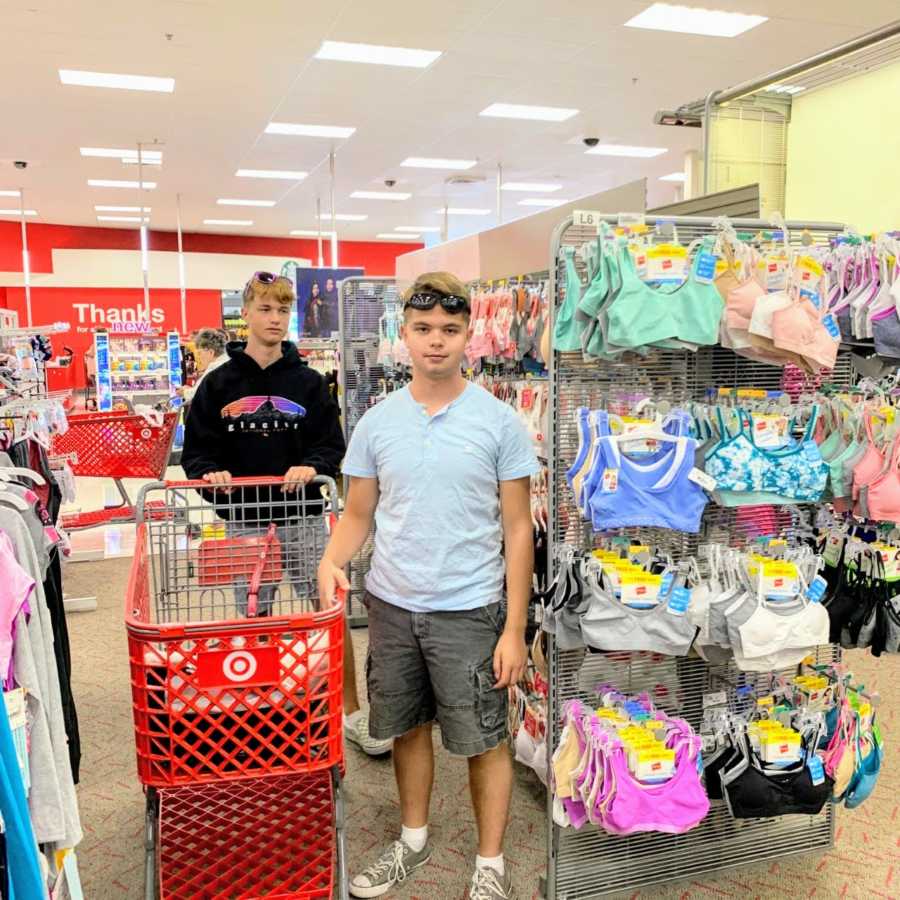
My teenage boys helped me shop today. Not for themselves, but for their little sister’s very first bras…because, well, breasts happen, y’all.
Every night, she comes down from the shower, short hair plastered to her head and still dripping. She never remembers to towel it. Tonight, she is wearing her first bra—a plain, nylon sports bra—and a pair of boxer shorts. She leans over me, cheeks soft as baby skin, smiling as she kisses me “goodnight.” By 10:50 p.m., she’s upstairs reading her own book before bed. We don’t sing bedtime songs anymore. She is growing, changing—and in turn, changing all of us.
In our family, we talk about everything. I believe conversations with our kids must always be: age-appropriate, medically accurate, and free of shame or taboo. From the time my oldest, now sixteen, stood up in the bathtub at age two to proudly show me how big his “pence” was, to frank discussions about puberty, periods, sex, and relationships—nothing is off-limits. I had hoped for a short break in early-pubescent angst with our boys, ages sixteen and fifteen, and round two with our girls, ages ten and six. But when Lucy came down one night asking if her nipples should be sore, I realized female puberty was circling the tarmac.
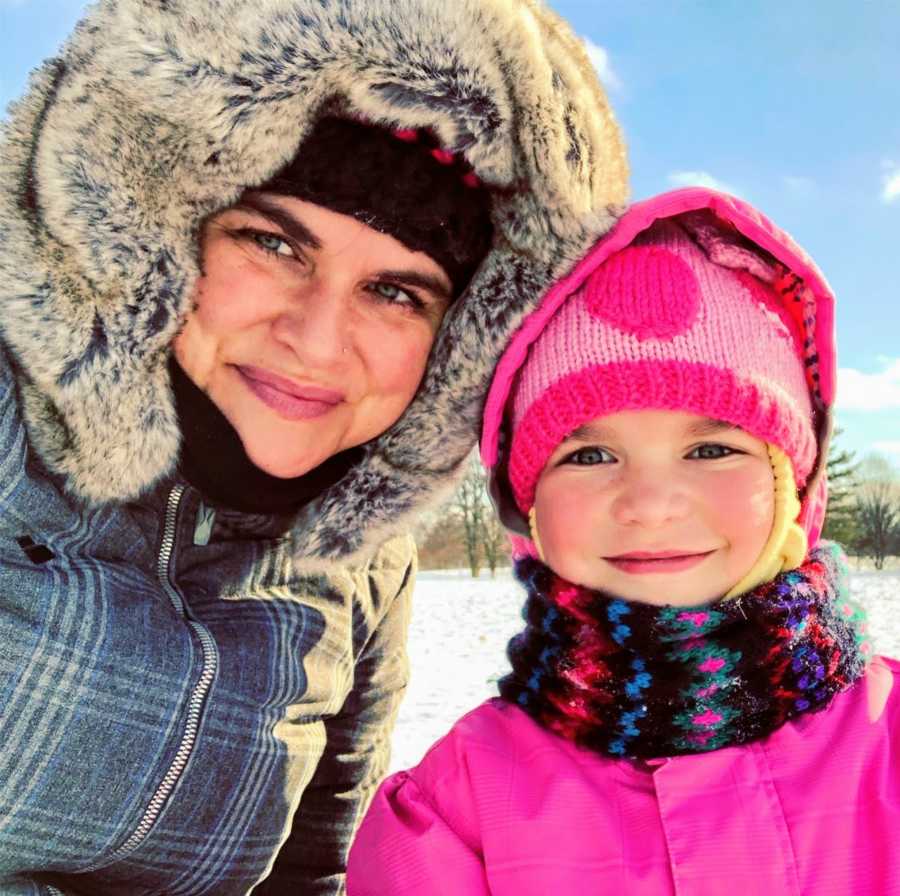
Just six months ago, Lucy had asked to cut all her hair off “like the boys wear theirs,” referencing her brothers’ shorn heads. At the time, I mourned the loss of braids, bows, and other little frilly things. I was wrestling with my own ideas about what it means to be a girl. In retrospect, that haircut was the first sign that she—and all of us—were entering a new stage of growth. Hair is just hair, after all, and being a girl is whatever she decides it is for herself.
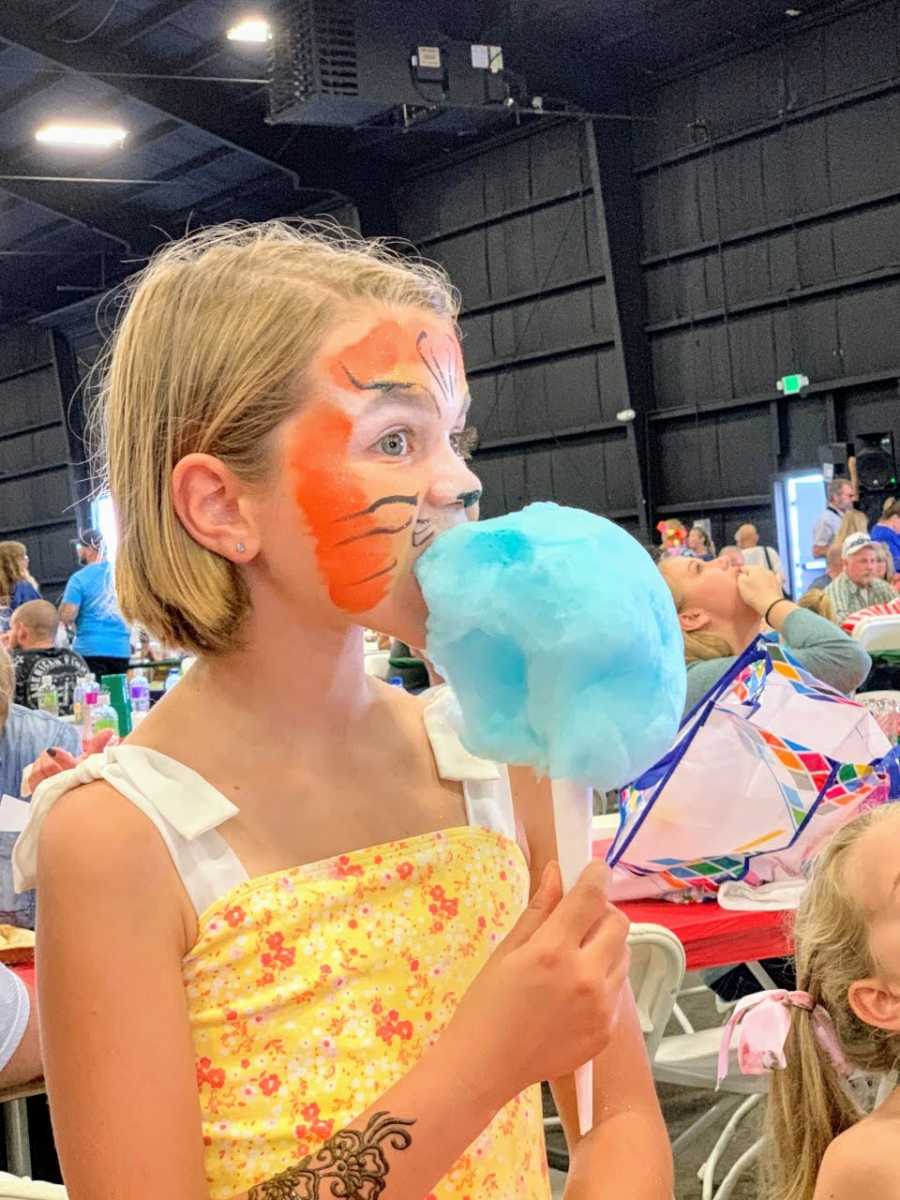
A few nights after the “budding breasts” conversation, she came down to tell her dad, who was sitting right next to me, that she needed bras. I love that our kids feel comfortable going to their dad for anything, but I—the one with breasts—was literally right there! Lucas said, “I think your mom would probably be a better expert on that.” I agreed, telling her I’d pick some up the next time I went to the store. And that was that.
A few days later, we went to Target to buy Elijah, our oldest, his uniform for his first “real” job at a movie theater. Micah, fifteen, was so excited he asked to come along. He’s still under the impression that having a job for a few weeks can get you a Tesla. After grabbing all the black wardrobe essentials, I remembered Lucy’s bras. So the boys and I headed to the tween girls’ underwear section. I explained that Lucy needed some plain, simple bras. Both boys were as surprised as I had been that this moment had arrived.
Naturally, they asked smart, practical questions: What are bras for, exactly? She doesn’t look any different—why does she need them now? Does this mean she’s starting puberty? I answered matter-of-factly, without fanfare or embarrassment.
When we got home, both girls were thrilled with the very basic three-pack of sports bras. Polly, six, acted as though Lucy had just received her first prom dress. Lucy ran upstairs to try hers on and returned proudly displaying it. Polly was in awe. The boys nodded, nonchalantly returning to their own business. There was no shame. No taboo. Just a simple, normal family moment—and a precedent that will carry us through all the changes still to come.
After my post about the shopping trip went viral, some people criticized me for taking the boys instead of Lucy. But Lucy doesn’t enjoy shopping. More importantly, making a big deal out of a natural, biological change—positively or negatively—adds hype to something that should feel normal. By taking the boys, I could answer their questions without pressure, and they now understand that buying a bra is no big deal. Should they ever need to buy one for a sister—or even a daughter—stigma will not be an issue. Some argued that I had taken away Lucy’s agency, but she has her whole life to adjust to her changing body. The key first step is that her family treats puberty as normal, natural, and nothing to fear.

The strangest criticism came from people obsessed with jock straps. Would I take my girls shopping for one? Heck yes. “This is a jock strap and athletic cup. It protects a boy’s penis like a helmet protects your brain.” Simple. Clear. Normal.
The heart of it is this: taboo is learned, not innate. If we normalize these conversations for our girls, we have a responsibility to normalize them for our boys too. Once, a woman’s ankle caused scandal. Now, our girls can wear their sports bras as pajamas without a second thought. Normalizing, educating, loving—that’s the goal.
Now, if only I could figure out how to get Lucy to towel her hair after showers.