When our children “act out,” “misbehave,” seem “difficult,” “moody,” “rebellious,” or “defiant”—whatever label we choose—it’s often their way of processing something they don’t yet have the skills to explain. They may not know how to talk about it, how to express it safely, or even fully understand it themselves. Adults do this too, but our society allows far less grace when children struggle this way. Too often, the response is shame, dismissal, lectures, punishment, or criticism—responses that only add more barriers and make communication even harder.
Behavior is communication.
Our nine-year-old fourth grader had started the afternoon in a great mood. We were getting ready for company, and she eagerly jumped in to help, unloading the dishwasher while we chatted as I began cooking. It felt special and easy, one of those moments where everything just flows.
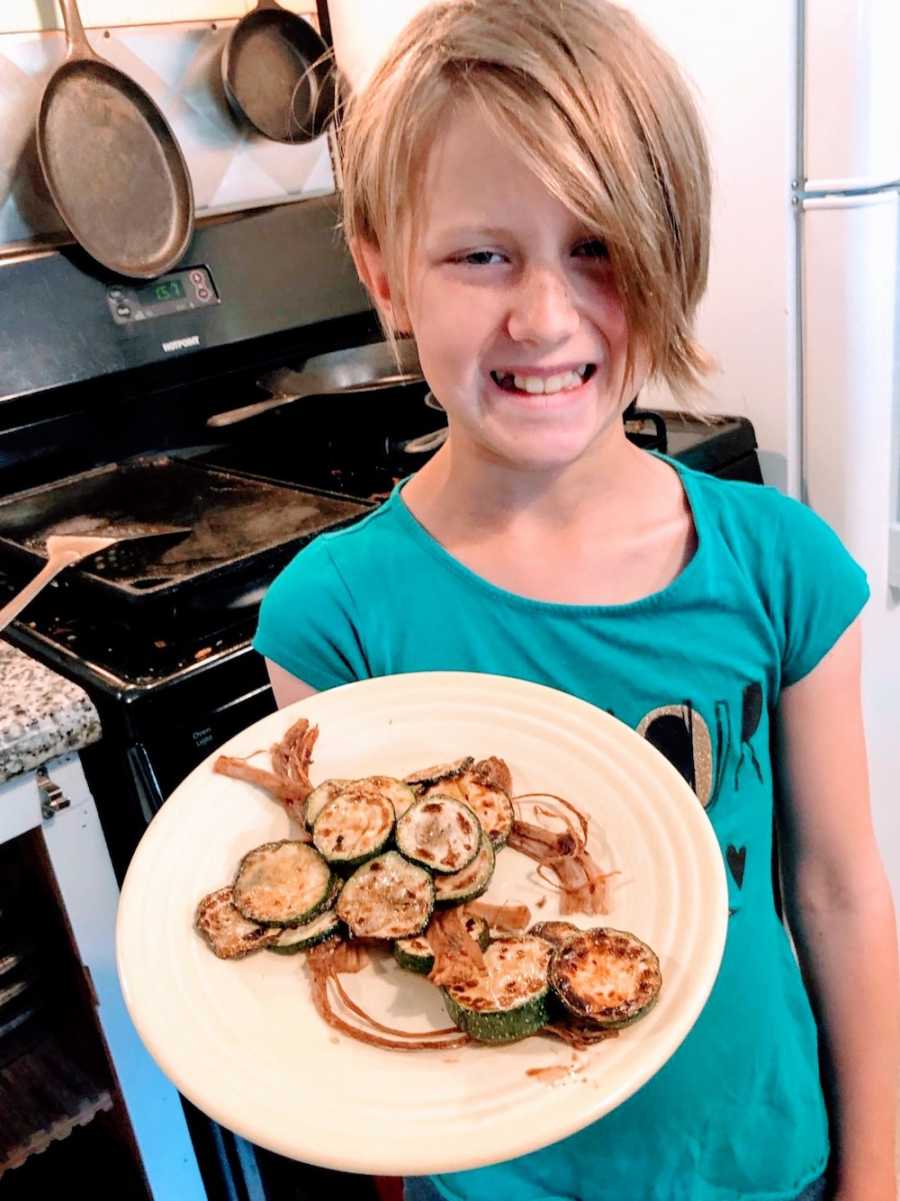
But within an hour, something shifted. She stayed helpful—going so far as to mop the floor a second time when I pointed out missed spots—but she grew quiet, short-tempered, and snippy with everyone. I wondered what was going on. There had been a small disagreement earlier between her and one of her older sisters, but they had talked it through and moved on. I assumed maybe it was still lingering.
An hour and a half in, just before our guests were due to arrive, the tension escalated. There were small conflicts with nearly everyone, and she became explosive and sharp. Even the sound of her footsteps made the rest of us instinctively give her space. I asked if she knew why she was grumpy. She snapped back that she wasn’t grumpy at all. I immediately realized my mistake. I apologized for telling her what she felt instead of asking. Asking for a do-over, I gently invited her to talk if anything was bothering her. She growled that it was nothing. I reminded her calmly that I wouldn’t allow her to be unkind, and that she needed to communicate with love and respect.
She stormed off.
For the next ten minutes, every time I passed her, I reminded her that I loved her and that she could tell me anything. Each time she insisted she was fine—which, in our house, usually means I’m not fine, but I don’t know what to do with it yet.
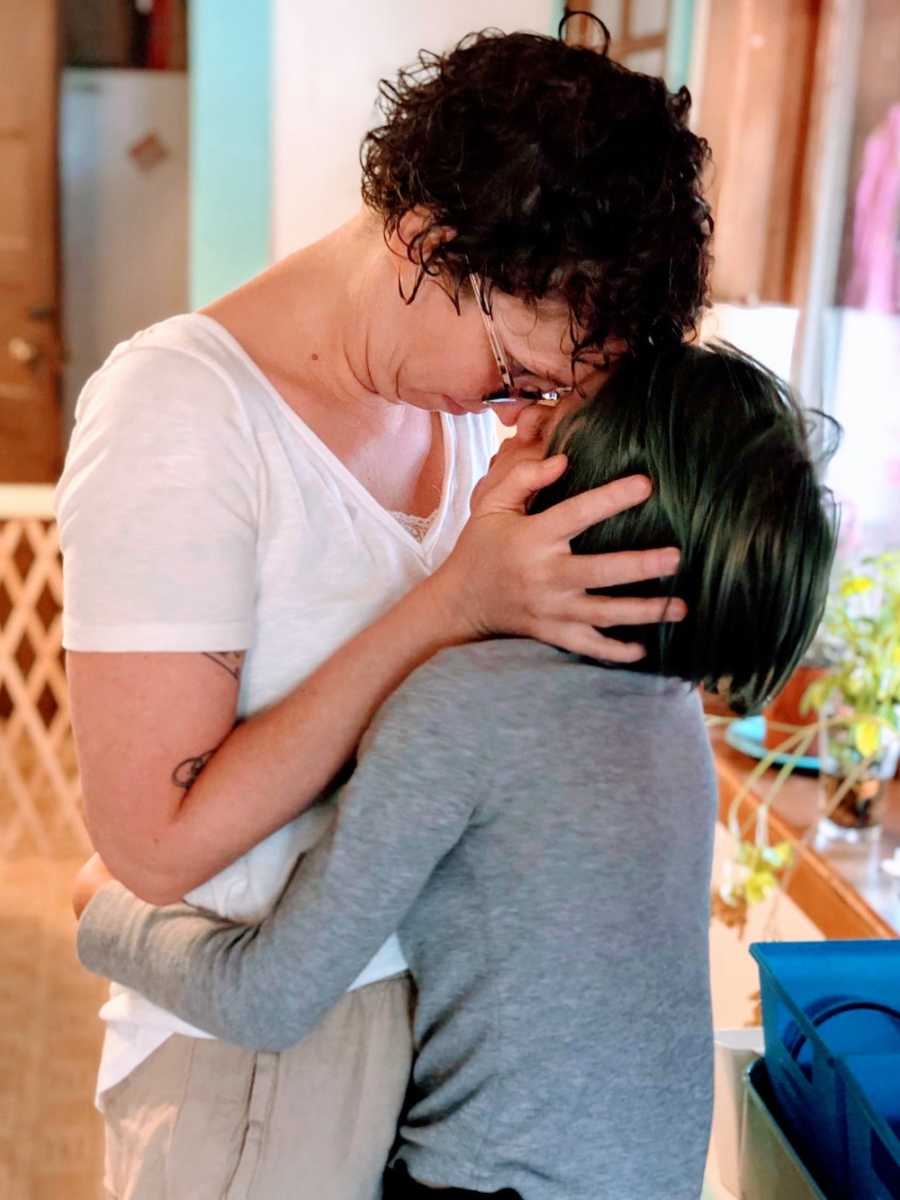
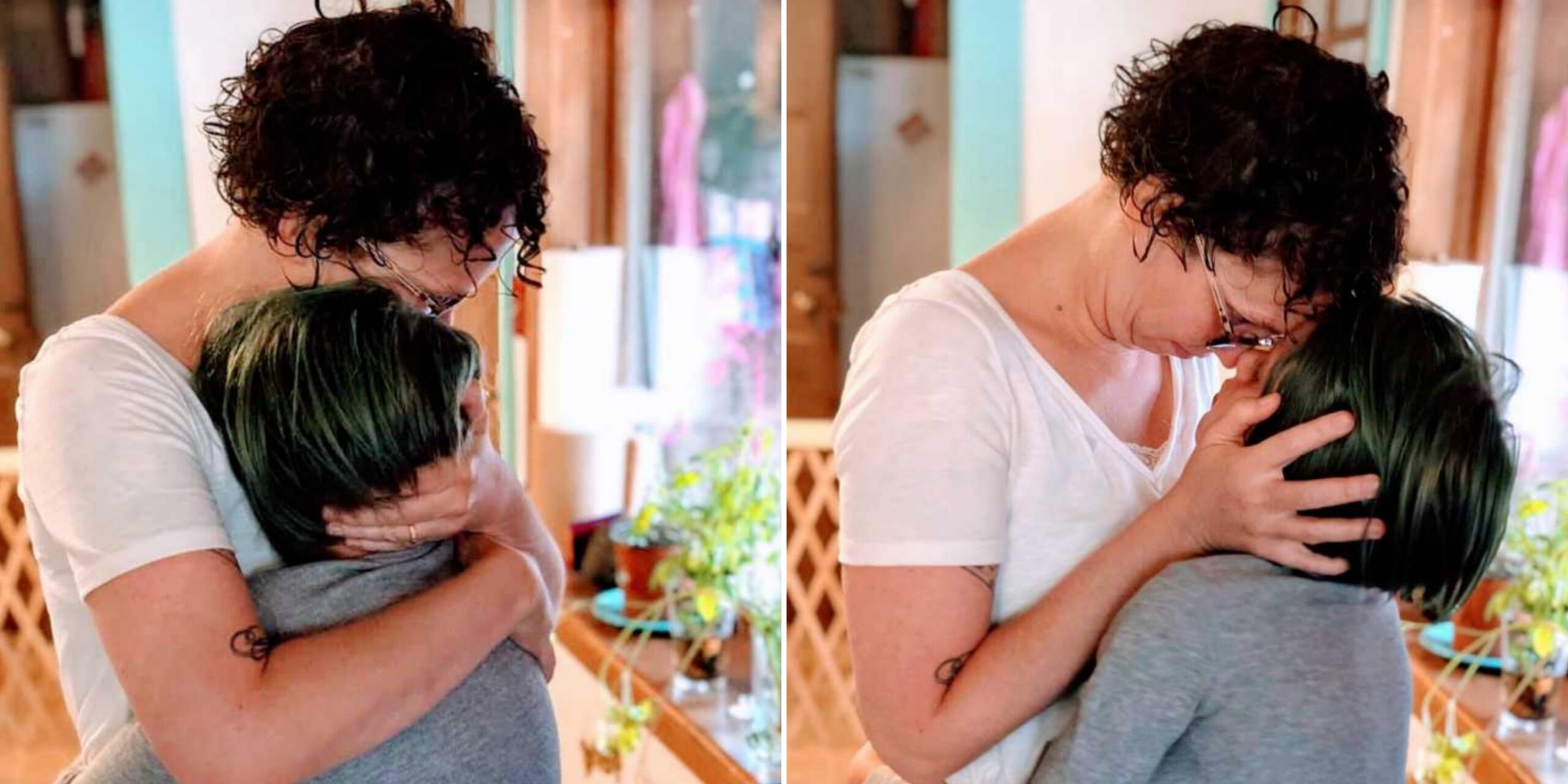
With ten minutes left before our friends arrived, we crossed paths again. The tension radiating from her was impossible to miss, and every family member had already tried asking what was wrong. Her dad suggested we stop questioning her and simply give her space. When we passed once more, I paused and asked if she wanted a hug. She stopped without looking at me, both of us suspended in that quiet moment while she searched for what she needed. Finally, almost reluctantly, she said yes and stepped closer.
I wrapped my arms around her, kissed the top of her head, and told her I loved her. Her arms tightened around me. I kept going, telling her how special and important she is to me, how much I care about her feelings. I told her nothing would ever make me stop loving her, and that the world is better because she’s in it. She buried her face into me, and I reminded her again that she could tell me anything—that because she matters to me, I want to know when something is hurting her.
We stood there quietly for a while. Then the words spilled out all at once. She told me she was jealous that her sisters have friends they get to see and have playdates with, and she doesn’t. That the friends coming over had kids who were her sisters’ friends, not really hers. That she felt hurt and lonely because her own friends never seem to have time for her and can’t get together.
And then the sobs came.

It wasn’t what I had assumed—but it wasn’t surprising either. All summer, and much of the previous school year, she has struggled with friendships. Her sisters have wide circles; hers is small. She is intensely loyal, forming deep bonds with one or two people and often closing herself off to others. Both of her closest friends left her school last year, and she never quite found new ones. This summer, everyone’s schedules were packed, and she’s barely seen the friends she does have.
My heart broke for her. It still does. Friendship struggles are so painful, especially at this age. She is friendly and outgoing, able to play easily with anyone she meets at the park or pool. But when it comes to close friendships, she values depth over numbers—just one or two people she can truly connect with.
As I held her, I chose not to offer solutions. I wasn’t sure I had any. What I could do was acknowledge her pain, validate her feelings, and give her space to process them. This wasn’t mine to fix; it was mine to support.
I don’t know how long we stood together in the kitchen, but eventually I returned to the stove just as our friends arrived. We laughed later about how tightly she had been squeezing me and how I appreciated being able to breathe during hugs. She took some time to herself, then rejoined everyone in a completely different place—smiling, joking, telling stories.
Her behavior had been frustrating. But it was never really about her behavior.
It was always about her pain.
Because behavior is communication.