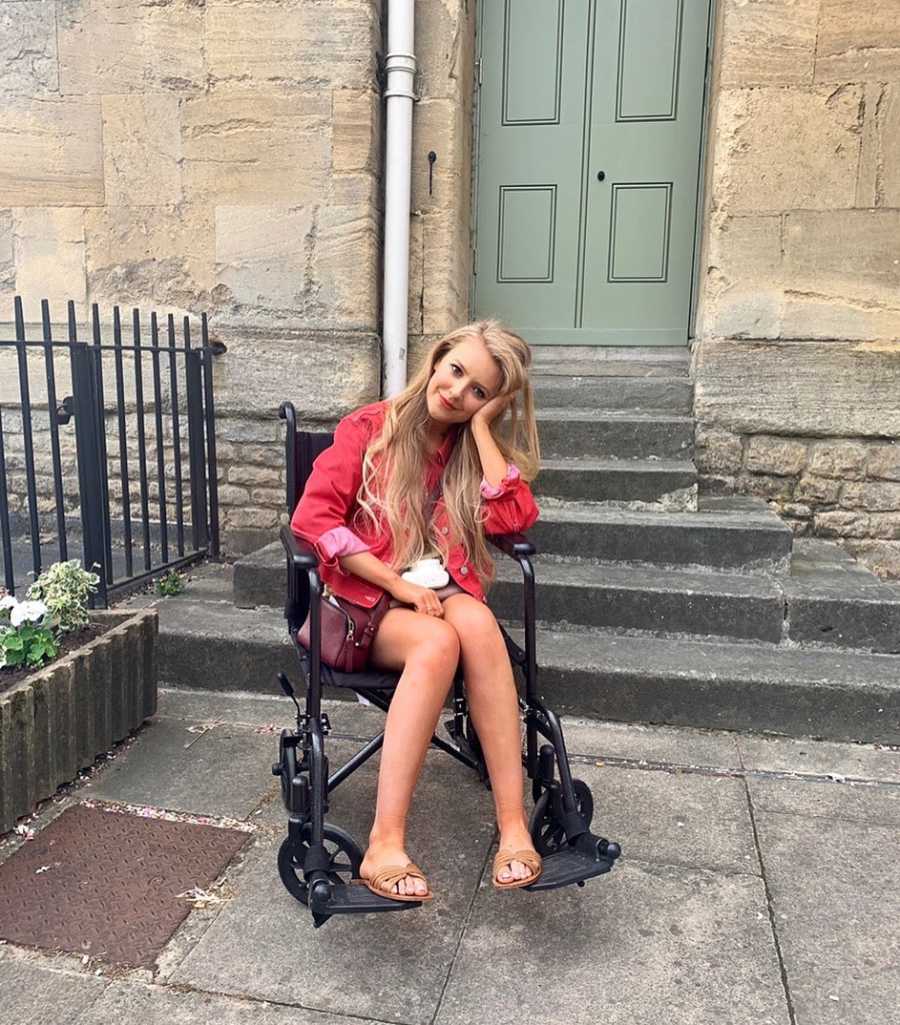
“How did a simple bite leave me in a wheelchair? It’s a question I’ve been asked countless times, especially with recent media coverage highlighting a new study showing rapidly rising Lyme disease diagnoses in the UK.

I honestly don’t remember ever being bitten. There was no rash—though only about 30% of people develop the classic bulls-eye rash from a tick—and I could have contracted Lyme from any biting insect: horseflies, mosquitoes, fleas, or even spiders. The truth is, I just don’t know what bit me or where.
My symptoms began around age 11 or 12—almost 15 years ago now—and they were subtle at first. I struggled with reading, writing, memory lapses, confusion, and trouble concentrating. At 13, after receiving the HPV vaccine, my immune system was weakened, and the Lyme worsened, bringing debilitating fatigue. By 15, glandular fever and swine flu left lingering symptoms—sore throat, swollen glands, and muscle pain—that never truly went away. At 17, a ski accident followed by a car crash left me with head and neck injuries, worsening my upper-body symptoms. Layered on top of all this was significant psychological trauma throughout my teens, which likely kept my body from ever fully recovering from illness or injury.
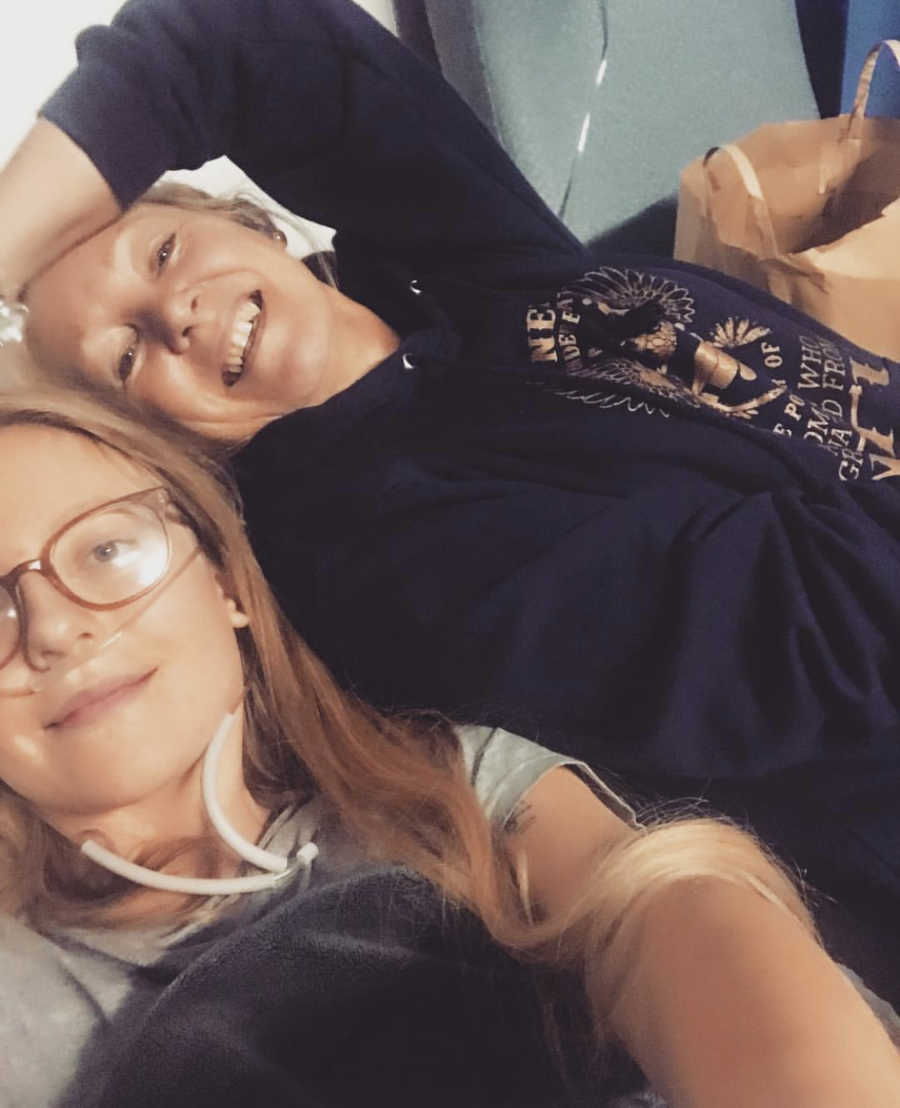
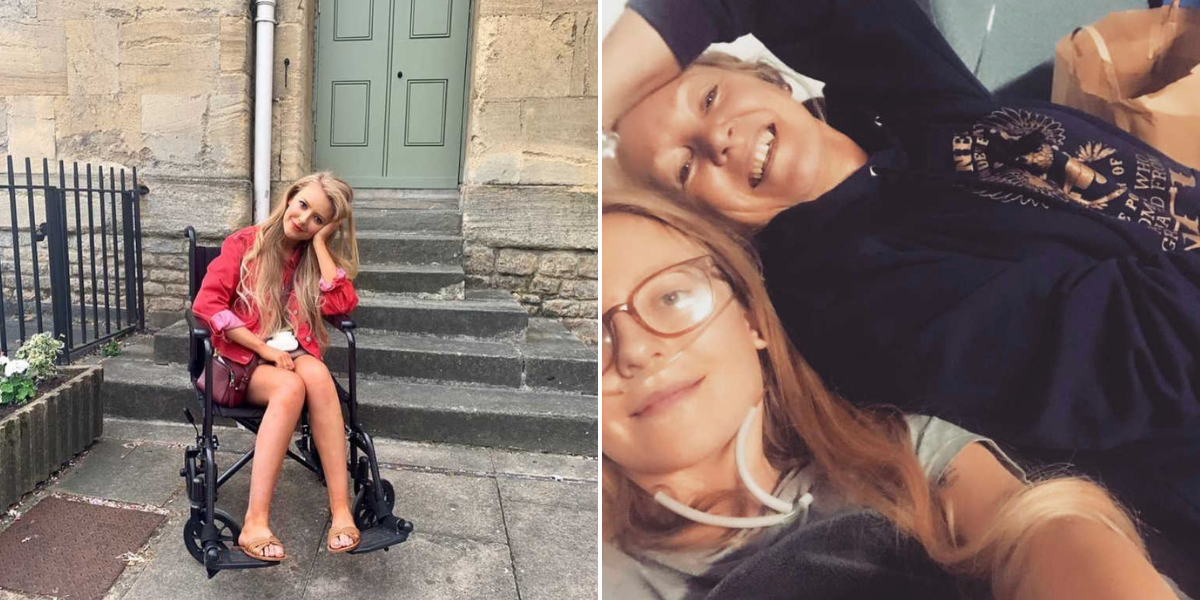
For years, my illness was invisible to those around me. Friends and family often didn’t believe I was sick because I looked fine. Relationships ended, friendships faded, and isolation and depression became constant companions. Through it all, my mom remained my unwavering hero. She was the first to recognize that something was seriously wrong and fought tirelessly to get me the medical attention I needed—even when I thought I didn’t need it myself.
By my early twenties, I was completely bedridden. My arms and legs had become paralyzed. I didn’t leave my bedroom for seven months or my house for eleven. I lived in darkness, with blackout blinds drawn, unable to tolerate light, sound, or touch. Even clothing and bed sheets caused unbearable pain. I was on the brink of needing a feeding tube because I couldn’t manage even puréed foods. Every two weeks, I was carefully carried to the bath for washing and changed into fresh pajamas, then returned to bed—a routine that continued for months.
During this time, I existed in a semi-conscious state. I couldn’t speak, communicate, or interact with the world, and in a strange way, it was almost a blessing—I wasn’t fully aware of just how badly I was suffering. But once I began to recover, the trauma hit hard. My mom, who had given up her work to care for me full time, had spent countless hours spoon-feeding me, holding cups to my lips, and silently crying whenever she left the room. Visitors were impossible; any noise or movement intensified my pain. Her strength and devotion were awe-inspiring, and I can’t imagine what those months were like for her.
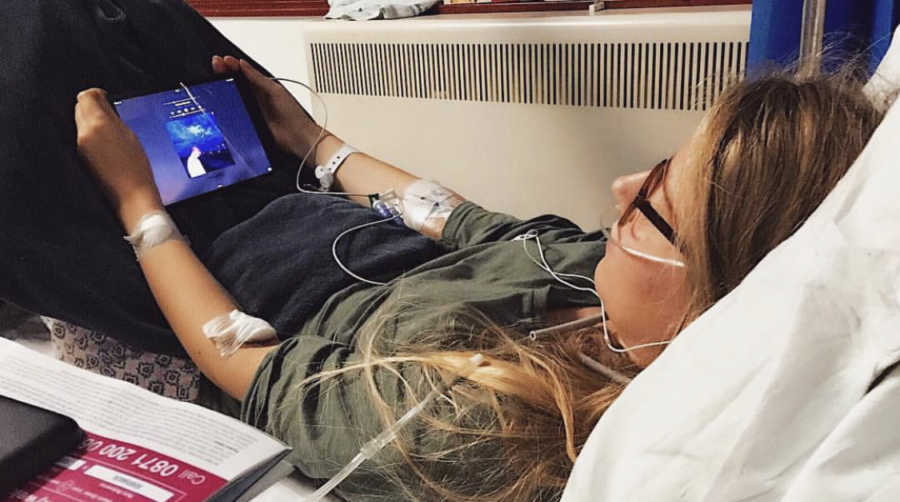
For years, the NHS couldn’t find the root cause of my illness, repeatedly diagnosing me with chronic fatigue syndrome and fibromyalgia but offering little treatment or support. It was only when I turned to Breakspear Medical, a private clinic in Hertfordshire, that I finally found answers. They suspected Lyme disease and tested me with a highly reliable German lab—result: positive. I’ve now been under treatment for three years. My progress has been remarkable, though I still experience over 50 symptoms daily. The key lesson here is that NHS tests are notoriously unreliable—negative results don’t necessarily mean you don’t have Lyme.
The day we finally received a definitive diagnosis was filled with tears of relief and joy for my family and me. After over a decade of searching, we finally understood the cause of my suffering. Since then, I’ve rebuilt my life—making new friends, finding a loving partner who truly understands and supports me, and pursuing treatments that continue to improve my health. I’ve learned that staying positive, researching relentlessly, and never giving up are crucial, even when the system fails.
I may never return to 100%, but after three years of dedicated treatment, I’m about 50–60% better. I refuse to stop trying—and I want anyone facing Lyme disease to know the same: it won’t be easy, and the path is often frustrating, but improvements are possible. There is always a way forward, and giving up is never an option.”